
Potomac, MD · Montgomery County
Pipe Split or Frozen Solid? Burst Pipe Repair in Potomac, MD Begins at the Main Shutoff
A split or frozen pipe turns into a race against water. This page covers the shutoff, the safe way to thaw a line, which pipes in a Potomac house freeze first and who is responsible for the break.
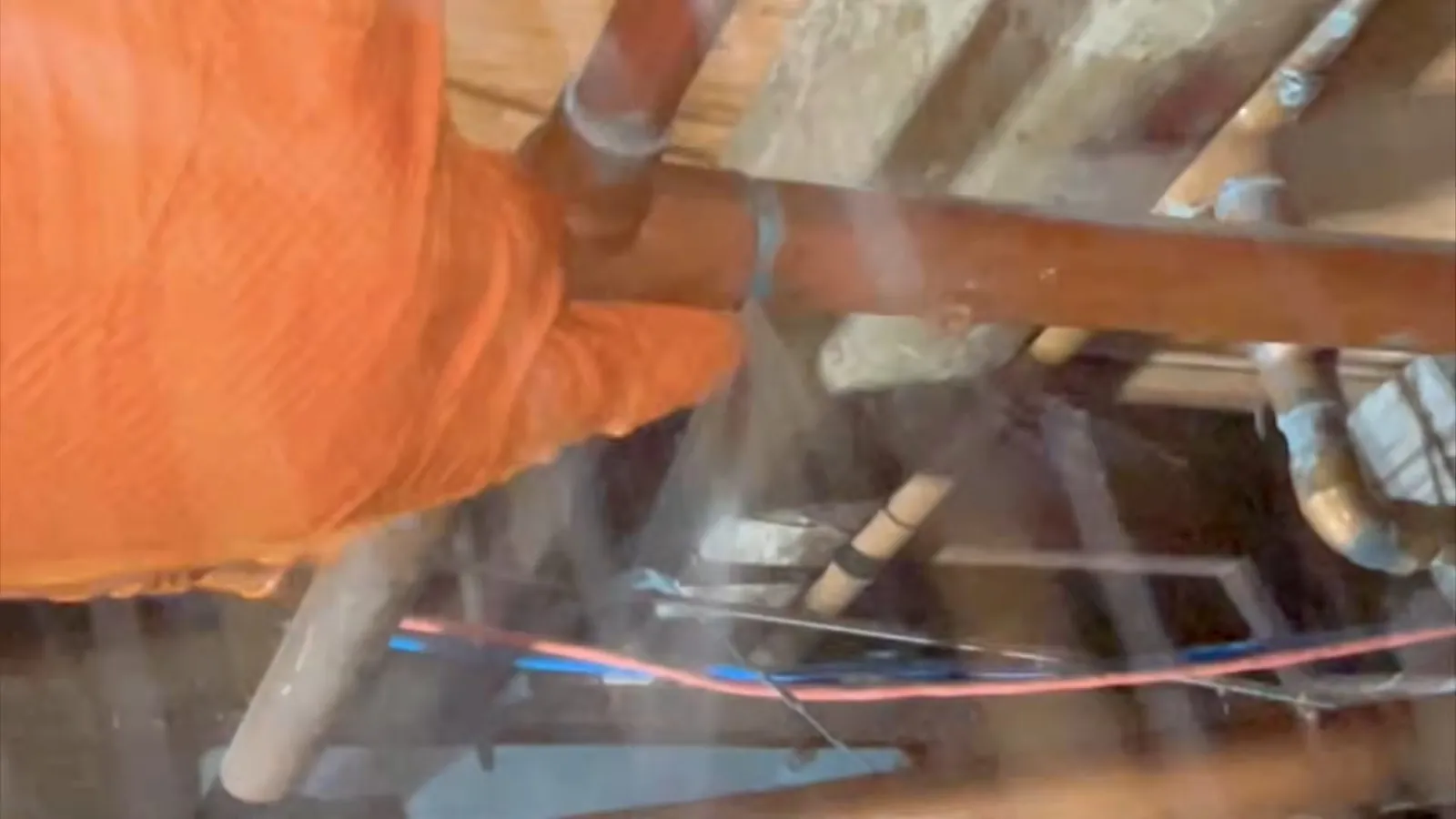
Water is still flowing: the first three moves
A split pipe can release gallons a minute, and every minute of delay moves water into walls, insulation and the floor below. The sequence below is short on purpose.
- Close the main water shutoff, usually where the line enters the house near the meter, a basement wall or a utility room.
- Open the lowest faucet in the house and one upstairs to drain the lines and relieve pressure.
- Turn off the water heater if water to it has been shut, so the elements or burner do not run dry.
- Stay away from standing water near outlets, extension cords and the panel. Leave and call 911 if water has reached them.
- Photograph the damage and the broken section before anything is moved.
If you cannot find or close the main, call us at once and say so. Locate the shutoff before you need it. The best time to find it is on a calm afternoon, and the best time to label it is now.
Frozen but not yet split: how to tell, and how to thaw safely
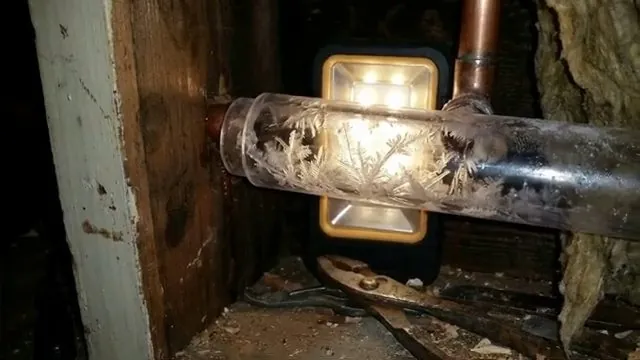
Not every freeze ends in a burst. If a faucet runs slowly or not at all in cold weather and no water is visible, a pipe may be frozen without having cracked. The danger is that ice expands, and a pipe that held through the freeze can split as it thaws.
- Open the affected faucet so water can flow as the ice melts.
- Warm the pipe slowly, working from the faucet toward the frozen section, with a hair dryer or warm towels.
- Never use an open flame, a torch or a heat gun that can scorch framing.
- Watch for leaks as the ice melts. If water appears, close the main and call.
- If you cannot reach the frozen section, such as one inside a wall, call a plumber rather than guessing.
Frozen lines often show up on the first hard freeze of the year, after a long cold stretch or when a heating system fails. Each of those is a good time to check the pipes you cannot see.
Pipe split or frozen?
Tell us where it is and whether the water is off. It routes you to a plumber serving your area.
Which pipes in a Potomac house freeze first
Montgomery County builds to a 30-inch frost line and designs for a winter low of about 13 degrees Fahrenheit. That helps in two ways. Buried lines sit below the frost, so a freeze usually starts inside the house or in exposed runs. And the design temperature tells you what the code assumes about the cold you should plan for.
| Location | Why it is at risk | What helps |
|---|---|---|
| Pipes in an unheated garage | Open to outdoor air with little insulation | Keep the garage door closed and insulate or heat the run |
| Crawl space supply lines | Cold air under the floor | Seal vents in winter and insulate the pipes |
| Exterior wall plumbing | The cold side of the insulation | Open the cabinet doors on very cold nights |
| Outdoor hose connections | Water left inside the faucet body | Disconnect hoses and shut off the indoor valve |
| Attic or unconditioned runs | Exposed to winter air | Add insulation and check after any heating failure |
A line on a north-facing exterior wall is a more likely suspect than one on an interior wall. If you have had a pipe freeze before, tell the plumber, because the same spot will freeze again.
Your side of the property line, or WSSC's?
WSSC Water maintains the water service from its main to the property line, and its emergency line is 301-206-4002. If water is surfacing in the yard or the street near the meter, that stretch is WSSC's to repair. A break between the property line and your house, or anywhere inside it, is the owner's.
The meter test tells you which side is leaking. Close the main shutoff at the house and watch the meter. If it still moves, the leak is between the meter and the house. The meter test steps for a hidden leak walk through the process in detail.
Repairing a split pipe: patch, section or replace
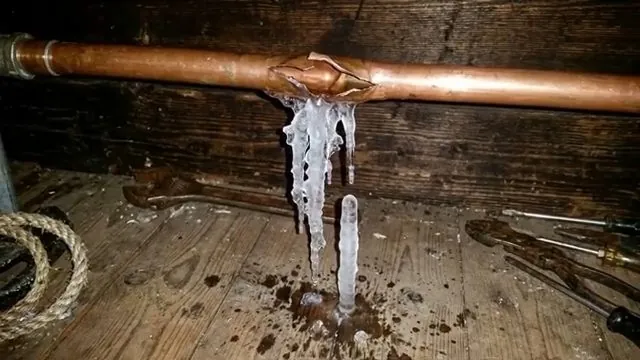
What the plumber does depends on the pipe and the damage. A split in copper may be cut out and replaced with a new section. A cracked PEX or CPVC run may be repaired with a fitting. If the pipe is old and has failed in several places, the better answer is a larger one.
- One clean split in an otherwise sound line: a section replaced or a fitting added.
- A pipe that froze once: repair the split and fix the cause, such as insulation or a draft.
- Several failures or pinholes along the same line: ask about replacing the whole system.
- A break inside a wall or under a floor: the plumber should locate it before cutting.
- Any repair to water service lines: ask for the license number, since WSSC requires most plumbing projects to use a WSSC-licensed plumber.
Ask the plumber to put the cause in writing. If a pipe froze, the report should say where and why. If it split from corrosion, that is a different conversation about the rest of the line.
After the repair: drying and documentation
Fixing the pipe stops the water. It does not dry the house. Wet drywall, insulation and flooring need attention quickly, and drying the structure after a burst covers what restoration involves. Do not rebuild until the moisture is gone.
Insurers want records. Photograph the break, the damage and any ice, and save the plumber's written report. Keep receipts for emergency measures such as shutting down the water and drying equipment. For ranges on repair work, the burst pipe repair cost ranges use wide estimates, not quotes.
A burst pipe in a business: sprinklers, shutoffs and the landlord
A split pipe in a store or office can mean more than a wet floor. The first step is the same as at home: find the shutoff that controls the broken line and close it. In a commercial building that valve may be in a mechanical room, a utility closet or a separate vault, and it may be the landlord's to operate, so find out ahead of time who holds the key.
If the broken line is part of a fire sprinkler system, a plumber is not the right trade. The Maryland Office of the State Fire Marshal requires fire sprinkler contractors to be licensed to install, repair or modify sprinkler systems in residential and commercial buildings. Its Sprinkler Licensing Office is at 410-822-7609. Shutting a sprinkler line down also leaves the building without fire protection, so the owner or the alarm monitoring company should be told before it is done.
- Learn where the main shutoff is, and which valves isolate each floor or tenant space.
- Check whether the lease puts the burst pipe, the damage or both on the landlord or the tenant.
- Photograph the break, the water and any damaged stock and equipment before cleanup.
- Ask whether the pipe is domestic water, heating water or a sprinkler line before anyone repairs it.
- For a break between the street and the building, WSSC emergency services is at 301-206-4002.
After the repair, ask for the plumber's written report to give to the building owner and the insurer.
Frozen and burst pipe questions
Can I thaw a frozen pipe myself?
Sometimes. With the water shut off at the main and a faucet opened nearby, warm the pipe slowly from the faucet end toward the frozen section using a hair dryer or warm towels. Never use an open flame or a torch. If you cannot reach the frozen section or see a split, stop and call a plumber.
A pipe burst in a wall. What should I shut off first?
Close the main water shutoff, then open a faucet at the lowest point to drain the lines. If water is near outlets, the panel or appliances, stay out of the area and call 911 or the electric utility before touching anything.
Who pays if the pipe broke before the water meter?
WSSC maintains the water service from its main to the property line, so a break on that stretch is WSSC's to repair. Call WSSC's 24-hour line at 301-206-4002. A break beyond the property line is the owner's responsibility.
Pipe already split?
Close the main shutoff and call. It routes you to a plumber serving your area.