
Potomac, MD · Montgomery County
Water Damage Restoration in Potomac, MD: Stop the Source, Dry the Structure
Water in the walls, floor or ceiling does damage by the hour. This page explains how to stop the source, what can be dried and what must go, and what to document, and a plumber serving Potomac handles the repair.
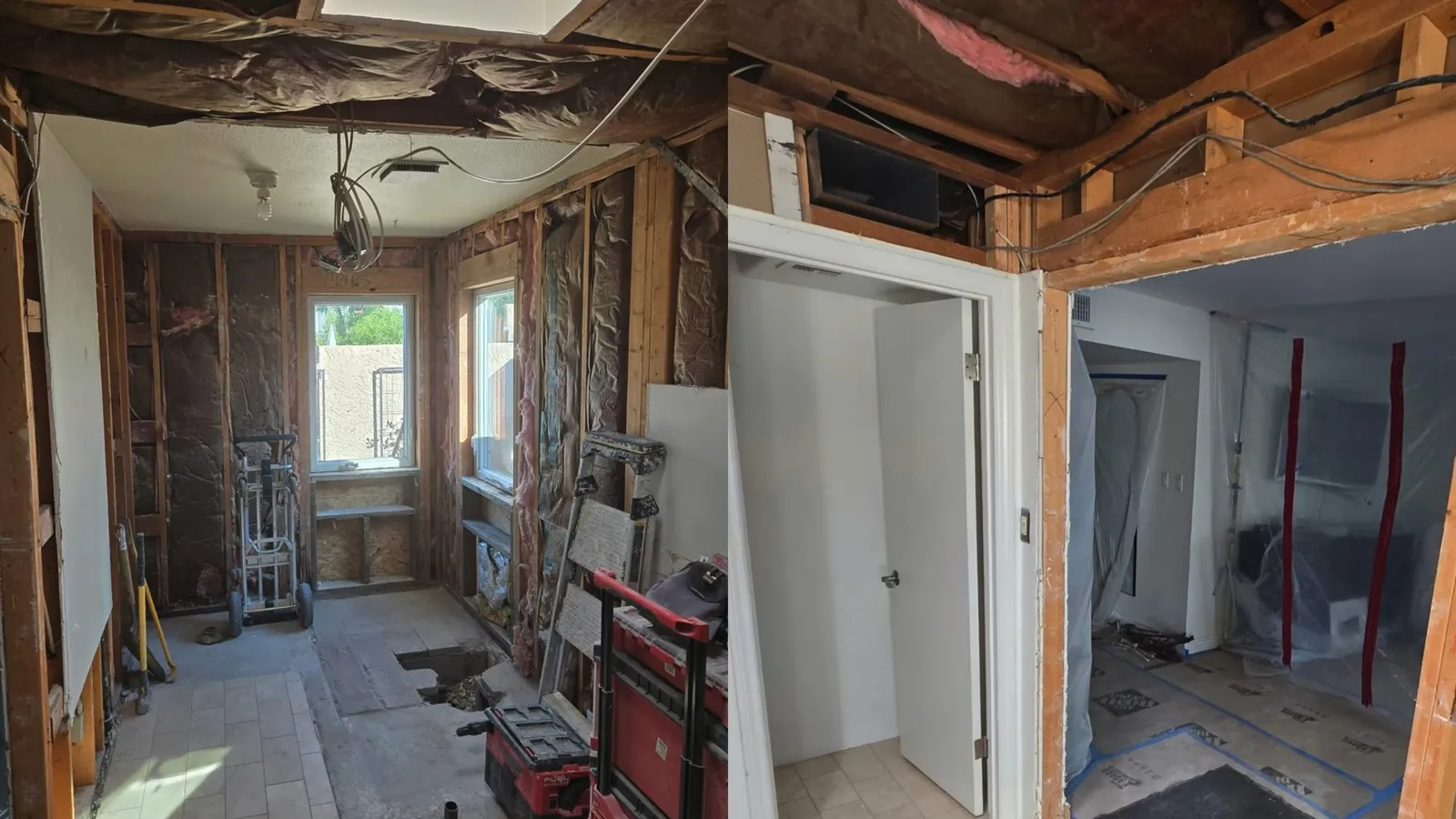
Before drying starts: stop the water and make the room safe
Every hour that water keeps arriving makes the job larger. Restoration begins after the source has been stopped, so the first decision is whether that has actually happened. A burst supply line is stopped at the main shutoff. A roof leak, a washing machine hose or an appliance line has its own valve to close.
- Close the main water shutoff, or the valve for the fixture or appliance that failed.
- Stay out of standing water if it may reach outlets, extension cords, appliances or the electrical panel. Call 911 or the electric utility if it has.
- Do not walk wet carpet or ceilings that sag, because a soaked ceiling can collapse.
- Move small furniture, rugs and valuables to a dry room.
- Photograph the damage before anything is moved.
If the water source is a plumbing failure, see burst pipe repair for the repair itself. This page covers what happens to the structure afterward, not how the leak was found or fixed.
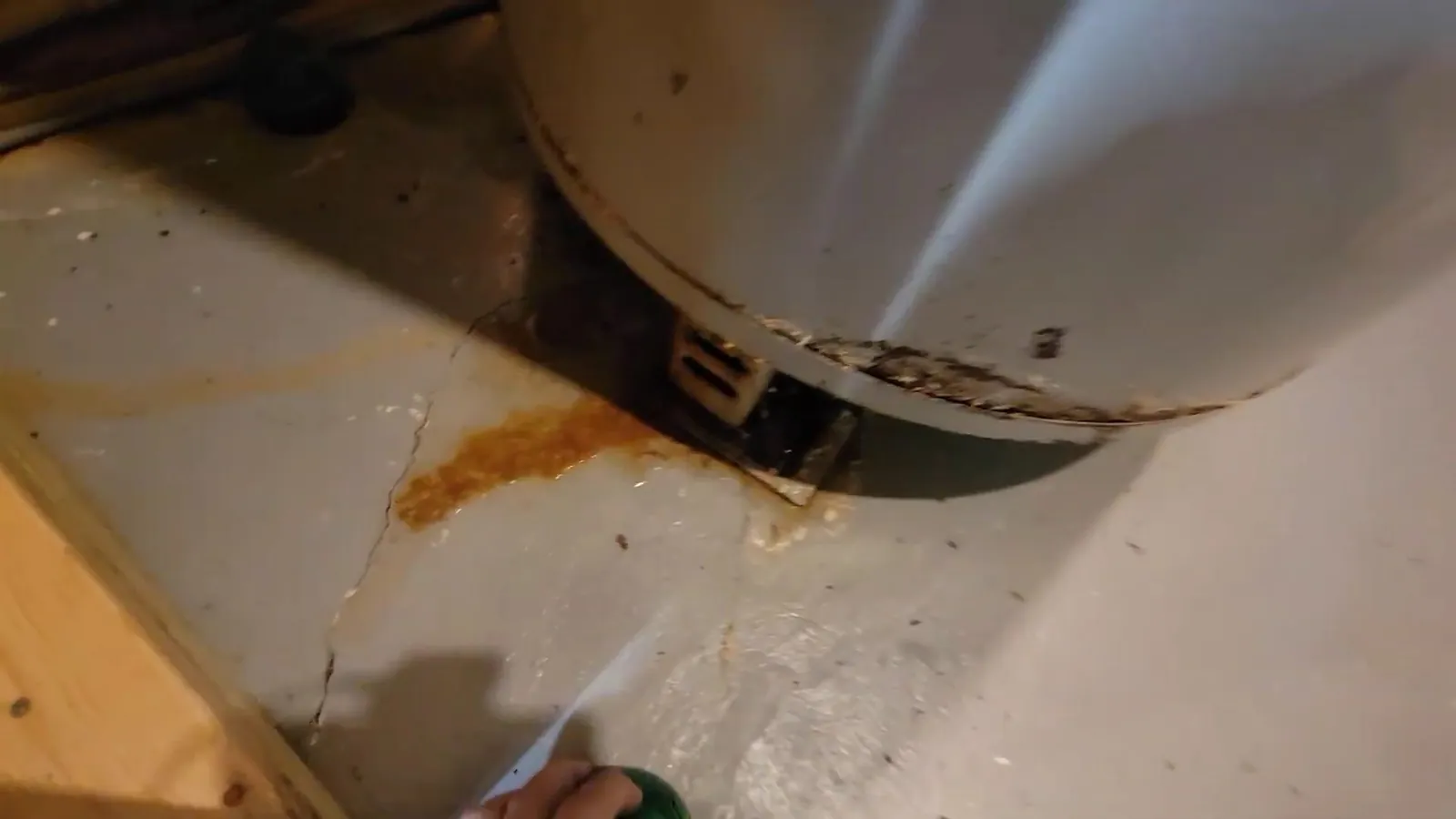
Clean, gray or sewage water: what the source means for what can be saved
Restoration firms sort water by how contaminated it is, and the category decides what can be dried and what has to go. The source you can name from where you stand is the best clue.
| Source | Typical category | What usually happens to porous materials |
|---|---|---|
| Supply line, faucet, tub overflow before use, ice maker line | Clean at first | Often dried in place if drying starts promptly |
| Washing machine or dishwasher discharge, sink overflow | Gray | Dried or removed depending on how long they were wet |
| Sewer or drain backup, toilet overflow with waste | Contaminated | Usually removed, not dried |
| Outdoor floodwater coming in | Contaminated | Usually removed, not dried |
Clean water that sits for a day or two does not stay clean, because it picks up dirt and begins to support growth. Time changes the category, which is one more reason to start quickly.
For a sewer backup, ask the plumber to document where the blockage was. WSSC states that it maintains only the connection to its main, and that the homeowner pays the plumber even when the blockage is in WSSC's section. If roots or a broken WSSC pipe caused the problem, WSSC's claims office at 301-206-7095 reviews requests for property damage or plumber fee reimbursement.
Water already in the house?
Say how long it has been wet and what the source was. A plumber serving your area takes it from there.
What gets dried and what gets removed, material by material
Drying is a measured process, not a matter of turning on fans. A technician reads moisture in each material, removes what cannot recover and sets equipment to pull the rest dry. The decisions differ by material.
- Carpet and padding: clean-water carpet can often be extracted and dried. Padding is commonly removed, and anything touched by sewage is discarded.
- Hardwood and laminate: boards that cup or lift after a long soak may need to come out. Quick action sometimes saves them, though not always.
- Drywall and ceilings: wet drywall that is saturated, sagging or stained is cut out. Wet insulation behind it goes too.
- Baseboards, cabinets and framing: solid wood often dries in place. Particleboard cabinets tend to swell and fall apart.
- Contents: hard goods can usually be cleaned and dried. Soft goods touched by contaminated water are usually discarded.
A good restoration plan tells you what is being saved, what is being removed and why. If a firm cannot explain which materials are drying in place and how that is being checked, ask them to show you the moisture readings.
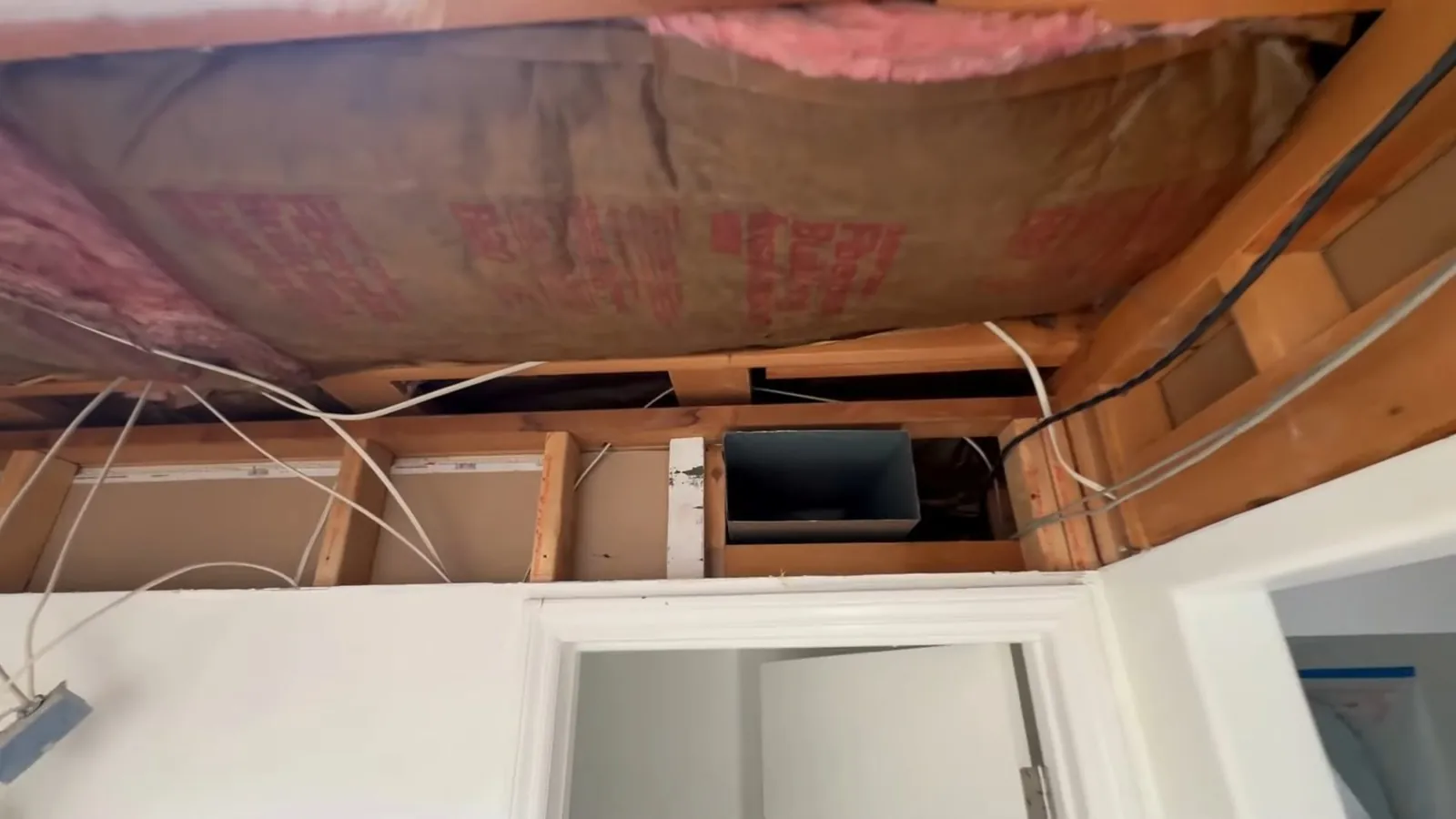
Documenting damage for your insurance claim
Insurance companies expect evidence from the first day. Photograph and video each room before cleanup, showing the water line, the affected materials and the source if you can see it. Keep damaged items until the adjuster says they can go, or photograph them first.
Ask for written records from everyone who works on the house: the plumber's description of the failure, the dates of each visit, and the restoration firm's moisture readings and equipment log. A plumber who writes down what failed and where makes the claim easier to settle.
If mold has already started
Mold needs moisture, and building materials that stay wet are where it begins. The EPA advises fixing plumbing leaks as soon as possible and drying wet items completely. For mold that covers less than about 10 square feet, the EPA says a homeowner can usually handle the cleanup; larger areas or heavy water damage call for an experienced contractor.
In scope here is mold removal where growth has followed a water event, and the drying that stops it from spreading. Mold testing is not part of this page. If you are unsure whether what you see is mold, a contractor can assess it on site.
- Mold on drywall or ceiling tiles that were wet for days.
- A musty smell in a room that was flooded or had a slow leak.
- Dark spots on the underside of carpet or on baseboards.
Stop the moisture first. Mold removal without drying the structure only delays the same problem.
Where restoration ends and rebuilding begins
Water from a storm, a flood or an ice dam usually does not start inside the plumbing. An ice dam forms when heat escaping into the attic melts snow on the roof, and the meltwater refreezes at the cold eave and backs up under the shingles and into the ceiling. The cure is roofing, insulation and attic ventilation, and the drying that follows is the same as for any water that has entered the house. Rain driven under shingles, a clogged gutter or rising groundwater is a roofing, drainage or waterproofing problem, and a plumber's part is limited to ruling out the pipes. Flood and sewer backup damage are often handled differently from sudden pipe damage on a homeowner policy, so read the policy or ask the insurer before work begins, and photograph everything first.
Water damage restoration stops once the structure is dry and unsalvageable materials are out. Rebuilding is separate work: new drywall, flooring, trim and paint. It is handled by a general contractor, and your insurer may have its own list of approved contractors for it.
If the cause of the water has not been found, begin with tracing the source of a leak. If the repair has not been done, the plumber who fixes it should state in writing what failed. For ranges on each step, see what water damage work costs.
Water damage in a store, office or other business
A flood in a business has the same physics as one in a house, with more people involved: an owner, a tenant, an insurer and sometimes a property manager. The first question is who is responsible for the building and who for the contents, because the lease usually decides who calls the plumber, the restoration company and the insurer.
The EPA's guidance for schools and commercial buildings sets the clock. It says to respond to water damage within 24 to 48 hours, before mold can grow. Carpet and its backing should be dried within that time, with water extraction, a dehumidifier and fans, and the subfloor underneath cleaned and dried. Ceiling tiles and insulation are discarded and replaced rather than dried. Drywall can be dried in place only if it shows no swelling and the seams are intact. If the water may be contaminated with sewage or chemicals, the EPA says protective equipment and containment are required by OSHA, and fans should not be used until the water is known to be clean.
- Photograph the water, the damaged stock and equipment, and the ceiling and floor before anything moves.
- List damaged inventory and furniture with quantities, and keep receipts for emergency work.
- Ask the insurer in writing whether the policy covers lost income while the space is closed.
- Ask the restoration company to record moisture readings at the start and at the end of drying.
- Find the source and have it repaired before drying begins, or the space will wet again.
The EPA water damage cleanup table lists the steps by material.
After the leak: questions about drying and cleanup
What should I do in the first hour after a pipe leak soaks a room?
Stop the water at the main shutoff, stay away from wet outlets and the electrical panel, move small items out of the wet area and photograph everything before cleanup. Then call your insurer and then us. Do not run a household vacuum on standing water.
What does water damage restoration include, and what does it leave out?
Restoration here means removing standing water, extracting it from carpet and padding, drying the structure and removing materials that cannot be saved. It does not include rebuilding walls, floors or finishes, or testing for mold.
Can wet drywall and carpet be saved?
Often yes if the water was clean and drying begins promptly, because carpet and drywall can sometimes be dried in place. Materials soaked by sewage or floodwater are usually removed rather than dried. A restoration technician can measure moisture to tell the difference.
Call when the water has already spread
Tell us what the water came from, how long it has been there and which rooms are wet. It routes you to a plumber serving your area.