
Potomac, MD · Montgomery County
No Hot Water or a Leaking Tank? Water Heater Repair in Potomac, MD: What to Check First
A cold shower, a rumbling tank or water pooling around the base all point to the same question: repair or replace. Tell us what you see, and it routes you to a plumber serving Potomac.
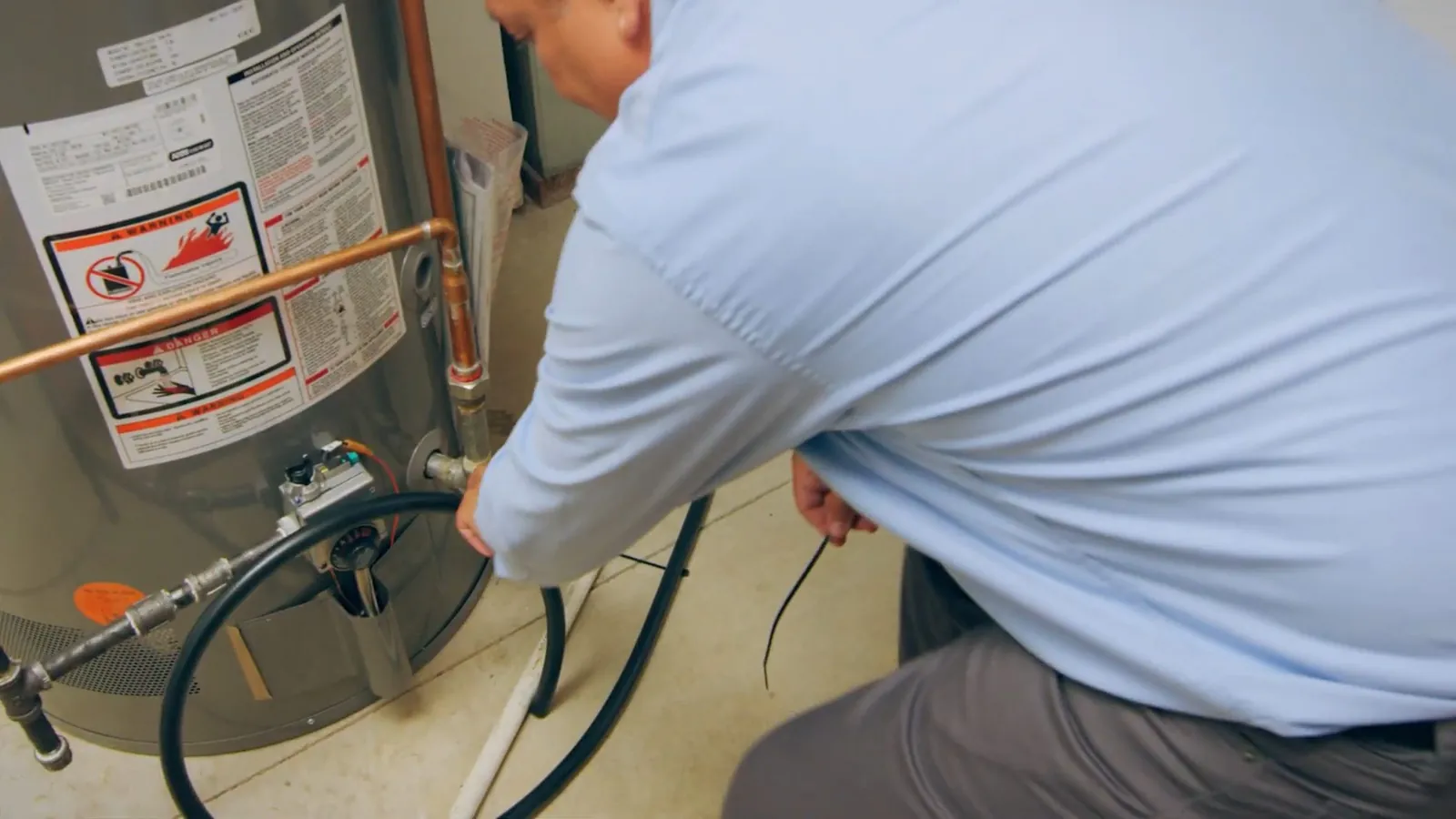
Water heater leaking right now: what to do before anyone arrives
Water on the floor around a heater is the symptom most worth acting on quickly, because a failing tank can release its contents. Start by working out whether the water is actually coming from the heater, since a leaking pipe above it or a dripping condensation line can look the same.
- Close the cold water supply valve on the pipe feeding the top of the heater, usually a lever or wheel handle.
- Turn off the power: switch off the breaker for an electric heater. For a gas heater, set the gas control to its off or pilot position as the label directs.
- If the water is spreading, close the main water shutoff and keep away from standing water near outlets.
- Photograph the heater, the label with the model and age, and the wet area.
- Note where the water is coming from: the tank body, the pipe connections, the relief valve line or the drain valve.
If you smell gas at any point, leave the house and call 911 or the gas utility. For Washington Gas customers the emergency line is 844-927-4427. A water heater problem is never a reason to stay inside with a gas smell.
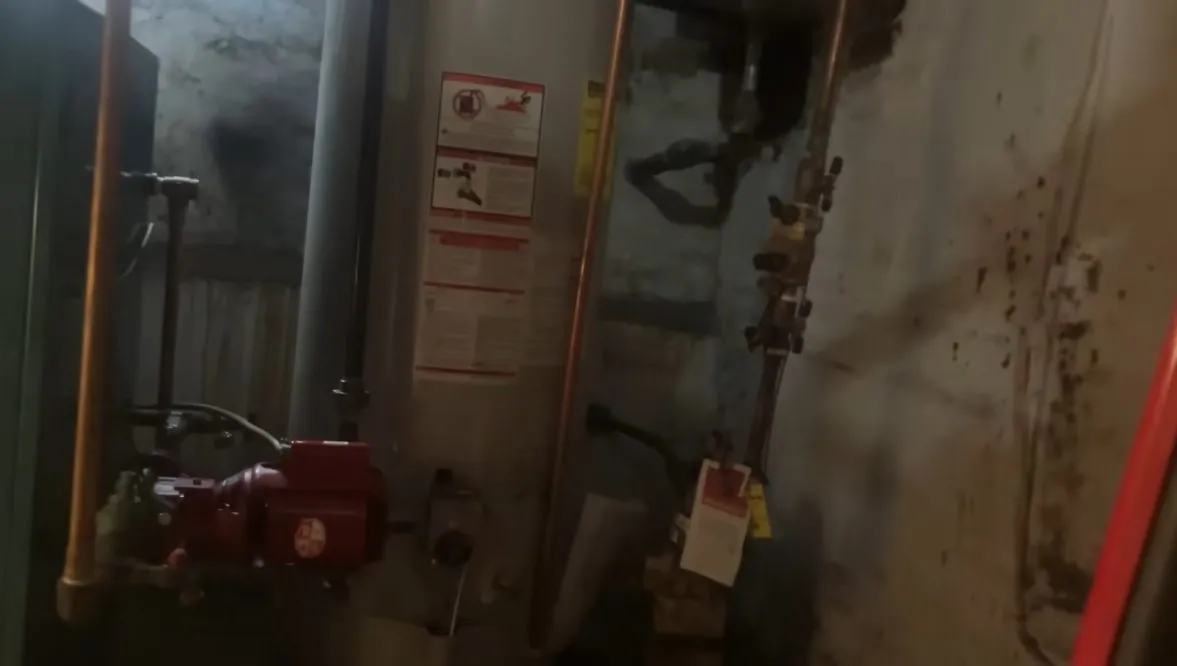
No hot water or lukewarm water: what the symptom points to
A heater that has gone cold is easier to diagnose than a leaking one, because the symptom narrows the parts that could have failed. The table lists the common patterns. It is a guide to what a plumber will test, not a reason to open the unit yourself.
| Symptom | Often points to (electric) | Often points to (gas) |
|---|---|---|
| No hot water at all | Tripped breaker, failed thermostat or both elements | Pilot or igniter out, failed thermocouple or gas control |
| Lukewarm water | Failed lower element or thermostat | Dirty burner, weak flame or heavy sediment |
| Hot water runs out fast | Sediment buildup, failed lower element | Sediment buildup, dip tube problem |
| Rumbling or popping noise | Scale or sediment on elements and tank floor | Sediment layer heated by the burner |
| Rust-colored hot water | Corroding tank or anode used up | Corroding tank or anode used up |
Rust-colored hot water, a rumbling tank and a unit past its tenth year add up. They suggest the tank itself is wearing out, which changes the question from repair to when to replace.
Heater down or leaking?
Say whether it is gas or electric and how old it is. A plumber serving your area takes it from there.
Repair or replace: the questions that settle it
A repair makes sense when one part has failed and the tank is sound. An element, a thermostat, a thermocouple, a relief valve or a drain valve can all be replaced for far less than a new unit, and the heater may run for years afterward. Replacement makes sense when the tank itself is leaking, when the unit is old and failing in more than one way or when repairs are piling up.
- How old is the unit? The label shows the date of manufacture in the serial number.
- Is the water coming from the tank body, or from a fitting that can be fixed?
- Has the heater been repaired before, and is this a second or third failure?
- Is the tank rusting, rumbling or losing capacity quickly?
- Would the repair cost approach the price of a new unit?
Ask the plumber to put the choice in writing: what the repair involves, what it is expected to buy you, and what replacement would involve instead. If the answer is replacement, see replacing the tank for the permit and inspection steps that apply in Montgomery County. If the unit is tankless, the maintenance questions are different, and tankless units have their own page.
What Potomac's hard water does inside a tank heater
WSSC filters Potomac River water for most of Montgomery County, and it tends to be hard. WSSC reports an average of about 120 to 130 mg/L of dissolved calcium and magnesium, which works out to roughly 7 grains per gallon. Heating that water drives the minerals out as scale.
Scale settles on the floor of the tank and coats electric elements. It makes the heater noisy, slows heating and forces the unit to work harder to deliver the same hot water. A heater that is never flushed fails sooner than one that is.
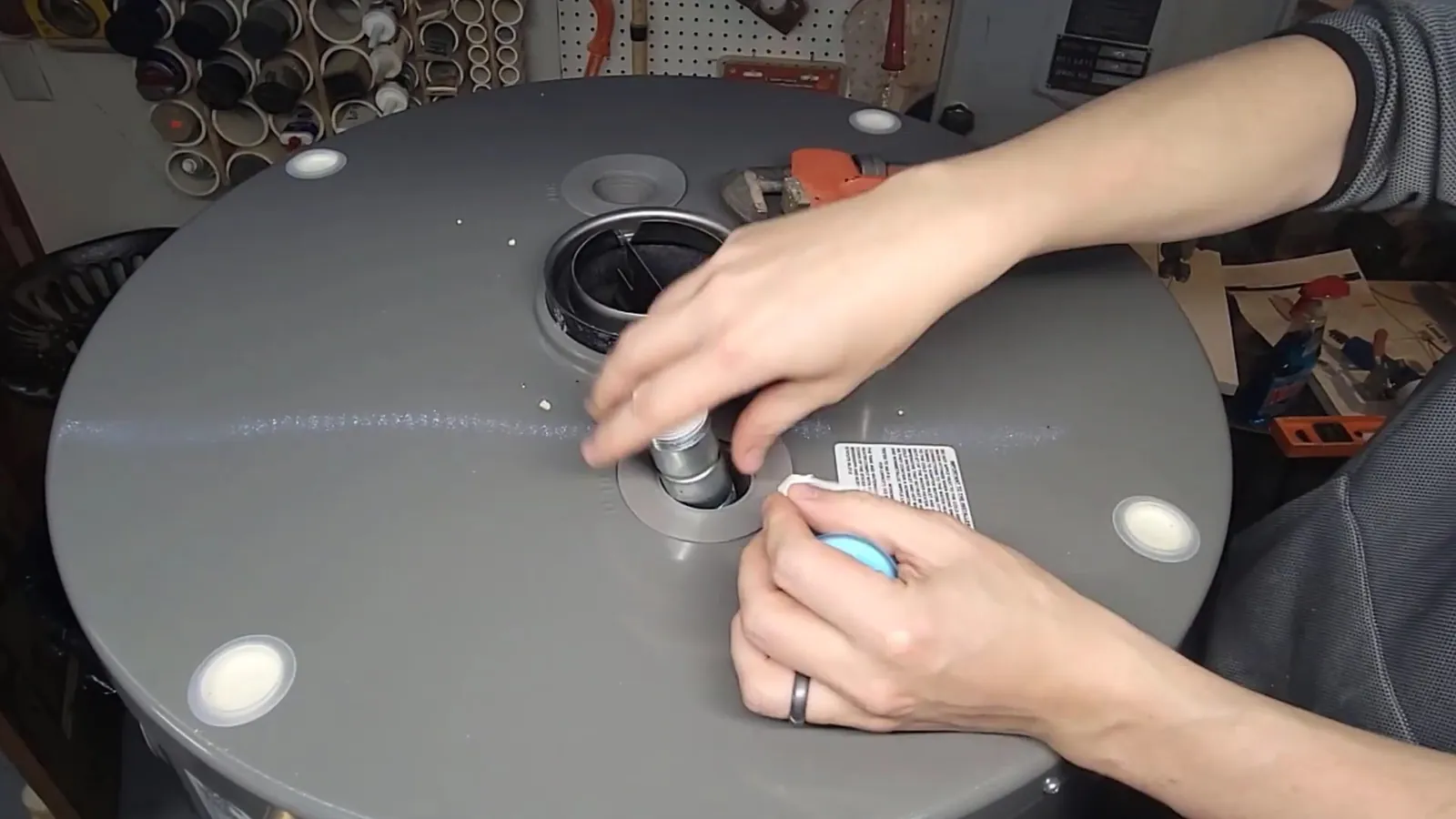
Most manufacturers recommend draining and flushing the tank about once a year, and checking or replacing the anode rod, which is the part that corrodes so the tank does not. Follow the manual for your model. A softener is a separate decision, and the plumber can explain whether it is worth considering for your household.
Gas water heaters: who handles which part
A gas heater adds a second set of questions. The utility handles the gas meter and the service line up to it. Washington Gas states that each customer is responsible for the gas piping on their side of the meter, and that unsafe conditions should be repaired by a licensed natural gas contractor.
In Montgomery County, WSSC issues the permit and performs the inspection for gas work. WSSC says gas appliance installations should be performed by WSSC-licensed individuals, and that water heaters, tank or tankless, are on its list of appliances that need a permit and inspection when new or replaced. A repair that touches gas piping or the gas control is work to hand to a WSSC-licensed plumber or gasfitter, and you can ask about the permit before the work begins.
If the problem is the gas supply itself, see gas supply work. If you smell gas, the order is always the same: leave, call 911 or the gas utility, and call a plumber afterward.
What to have in writing before the plumber leaves
If a faucet drips or a shutoff valve sticks near the heater, mention it when you call. The plumber can often look at the heater and those fixtures in one visit, and the invoice should list each repair as its own line.
A repair invoice that only says "fixed water heater" is hard to use later. Ask for a short record that covers the following, and keep the label photo you took earlier.
- The model, serial number and age of the heater.
- Which part failed and what was replaced.
- Whether any gas, venting or relief valve work was done, and whether it needed a WSSC permit or inspection.
- Any sign of tank corrosion or scale the plumber saw, and what they recommend next.
- The quoted price, written down, after the diagnosis.
The cost page explains water heater repair costs in wide ranges, and the plumbing questions page answers permit and licensing questions that come up with gas appliances.
Hot water questions people ask before they call
My water heater is leaking. Should I repair it or replace it?
A leak from a fitting, valve or drain can often be repaired. Water coming from the tank body itself usually means the tank has failed and needs replacing. Shut off the water and the power or gas first, then have a plumber find where the water is coming from.
How long does a tank water heater usually last?
Many tank heaters last roughly 8 to 12 years, and manufacturers differ. In hard water the lifespan can be shorter if the tank is never flushed, so age plus a rumbling sound or rust-colored hot water is a good reason to plan a replacement.
Why is my hot water only lukewarm?
On an electric heater a failed lower element or thermostat is a common cause. On a gas heater it can be a dirty burner, a weak pilot or a failing thermocouple. Sediment buildup also cuts capacity. A plumber can test which part has failed.
Hot water gone? Call us
Tell us whether the unit is gas or electric, whether it is leaking and how old it is. It routes you to a plumber serving your area.