
Potomac, MD · Montgomery County
Pinhole Leaks or Old Galvanized Lines? Whole-House Repiping in Potomac, MD: Decide Before You Cut
A string of pinhole leaks or rust-colored water often means the pipes are wearing out. This page helps you check what you have, decide between repair and replacement, and learn what WSSC requires.
What are your pipes made of? Start with the evidence you can get
A repipe decision starts with knowing what you have. Homes in the area range widely in age, and pipe materials change with the era. Guessing from the house's age is not enough, and a plumber's quote is only as good as the pipe knowledge behind it.
WSSC publishes a pipe-type inventory map where you enter your address and see the known or reported material for your service line. It also describes how to verify a pipe's material with a magnet. For galvanized pipe, WSSC says there are two types on the customer side, and one type requires replacement while the other does not. WSSC points to its Service Line Replacement Program for customers whose records show lead.
- Look up your address on the WSSC pipe-type map before you collect quotes.
- Find the pipe where the water line enters the house and note its color and magnetism.
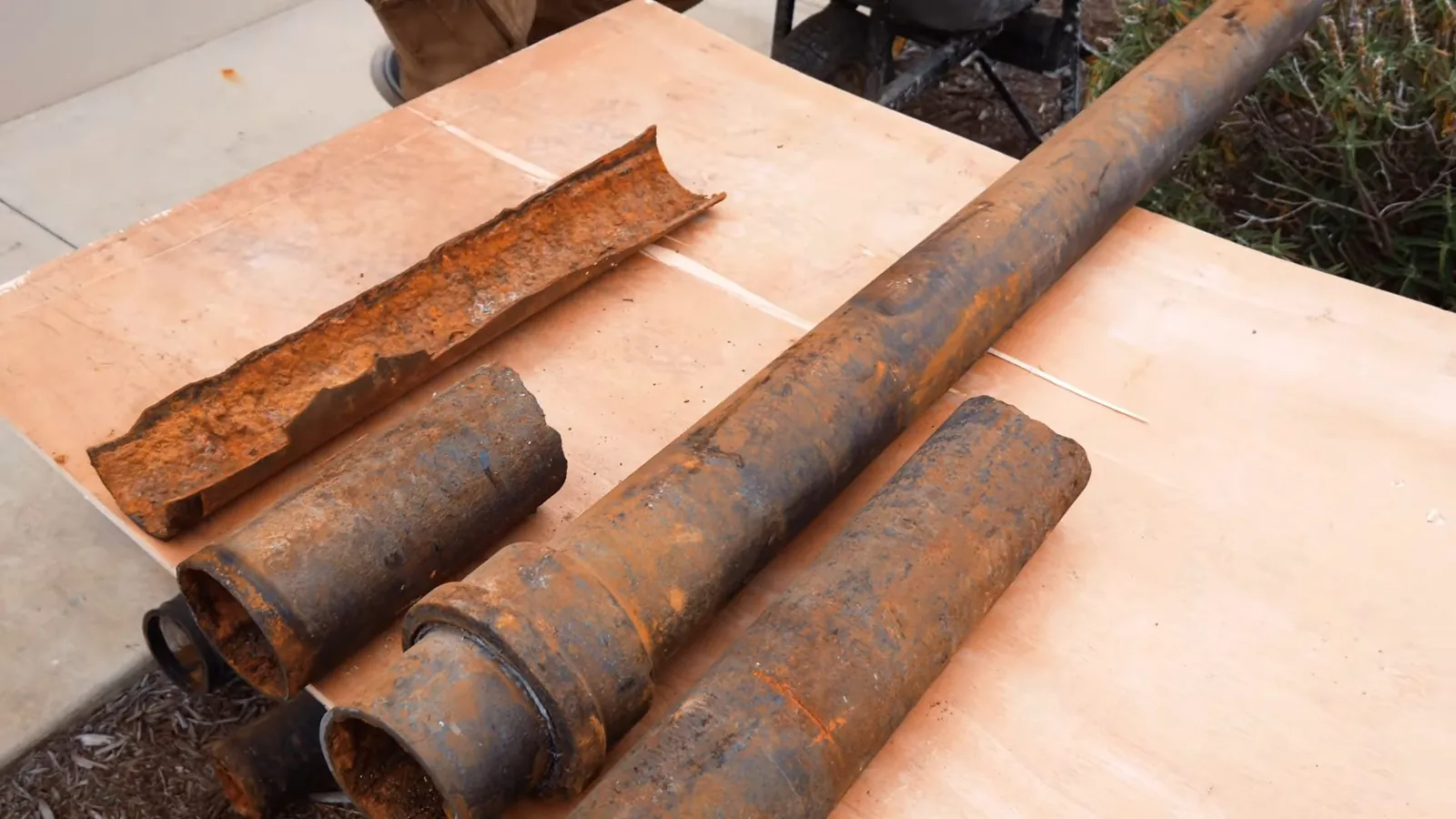
- Ask the plumber to open a section and show you the interior of a failed pipe.
- Photograph any corroded sections, green crust or mineral buildup you find.
The map covers the service line, not every pipe inside the house, so the plumber's inspection still matters. What you learn from both tells you whether you are dealing with a lead question, a corrosion question or a general age question.
Repair the leak, or replace the system?
One pinhole is a repair. A pattern of pinholes is a message. The question is whether the next failure is a week away or ten years away, and the plumber's job is to judge that from what the pipe looks like.
| What you are seeing | Points toward | Why |
|---|---|---|
| One leak after an accident, such as a nail or a freeze | Repair | The rest of the line is sound |
| A second leak in the same line within a year or two | Replace that run, or the system | The pipe is failing along its length |
| Pinholes in several rooms | Replace the system | The pipe wall is thinning everywhere |
| Rust-colored or brown water from several fixtures | Evaluate for replacement | Interior corrosion releases rust into the water |
| Low pressure at fixtures far from the main | Evaluate for replacement | Galvanized pipe narrows as it corrodes |
Ask the plumber what they see in the pipe, in plain words, and ask to see the removed section. A repipe is a significant project, and the right reasons are visible. If the leak is a one-off, fixing a single failed pipe may be all you need.
Leaks keep returning?
Tell us how many there have been and where. It routes you to a plumber serving your area.
Which material, and what the quote should say about it
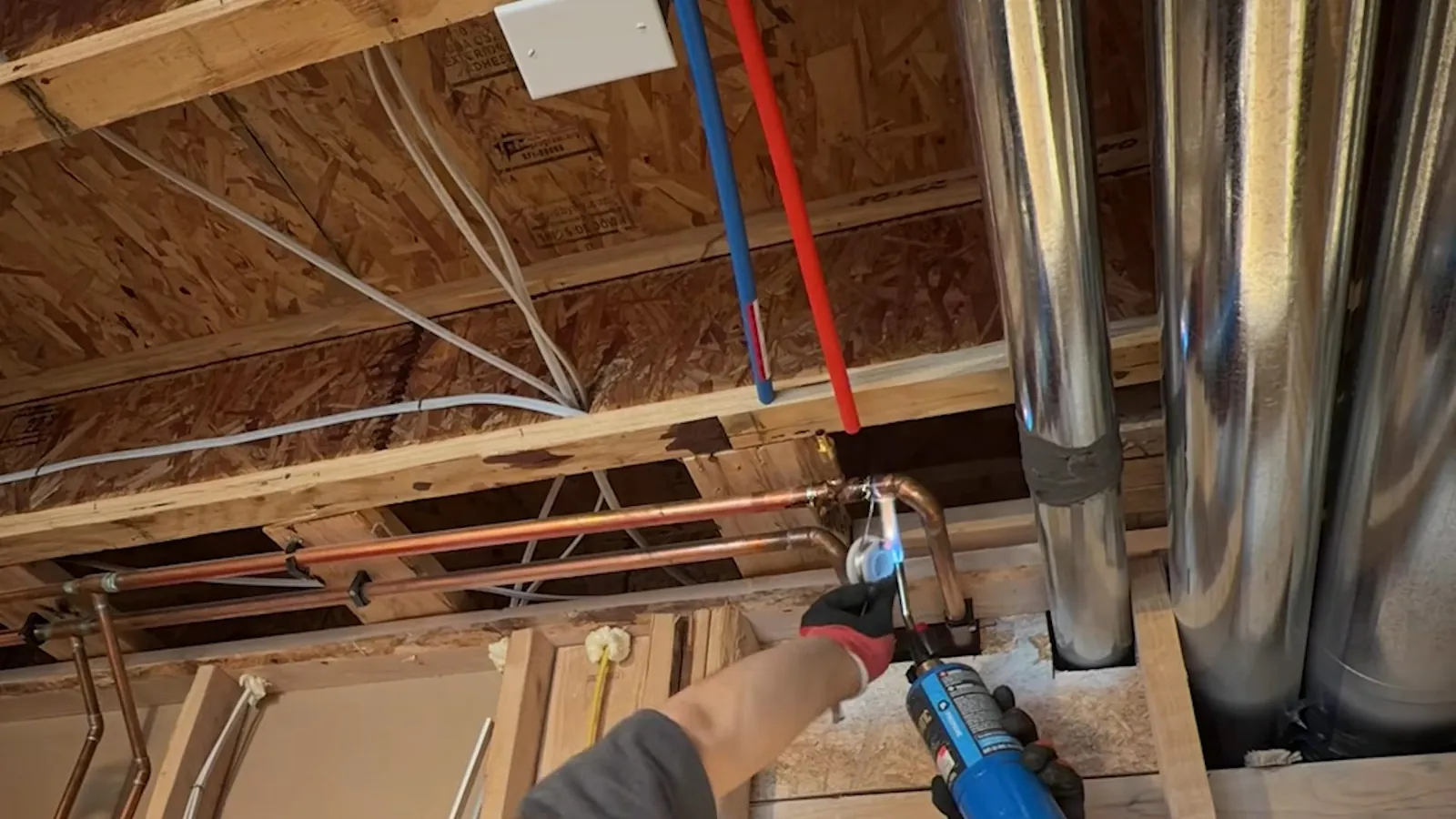
Modern repipes commonly use PEX, copper or a mix of both. PEX is flexible plastic tubing that can be pulled through walls with fewer openings. Copper is rigid, long-established and soldered. Each has a place, and the right choice depends on the house, the plumber's experience and what the plumbing code accepts for the job.
Do not take a general claim about any material as settled. Ask the plumber to name the material, the fittings and the code sections that apply, and to confirm that the material is allowed under the WSSC plumbing code for your job. Potomac water is hard, about 7 grains per gallon by conversion from WSSC's hardness figure, so ask how the fittings and the pipe will hold up with scale.

- The exact pipe and fitting material, written on the quote.
- Where new lines will run: attic, basement, walls or crawl space.
- How many openings will be cut in drywall, and who patches them.
- Whether the water heater connections and shutoff valves are replaced too.
- The warranty on materials and on labor, and who provides each.
Who may do it, and what the permit and inspection involve
WSSC states that most plumbing projects in Montgomery County must be done by a WSSC-licensed plumber, and it names interior repiping among them. You can verify a license by calling 301-206-8588. Permits go through WSSC's online system, and Permit Services can be reached at 301-206-4003.
For a short-form permit, WSSC says the homeowner or a representative must escort the inspector for inside and backyard inspections. Inspections are booked at 301-206-4004 using the permit number from the plumber. Plan for someone to be home and ask when the inspection is expected.
Living through a repipe: water shutoffs and opened walls
A repipe disrupts the house, and the quote should explain how. Water is shut off while lines are replaced, usually in stages, so ask when you will have water and when you will not. Walls and ceilings are opened where access is needed, and then closed again.
Ask what the plumber does and what you handle separately. Patching and painting are often a different trade. Move furniture and valuables from the areas where walls will be opened. If a leak has already wet the structure, drying the wet walls should come before the new lines are closed in.
- How many days, and when will water be off?
- Which walls and ceilings will be opened?
- What is restored, and what is left for another contractor?
- How will you protect floors and furniture?
- What is the final inspection step, and when is it scheduled?
For wide price ranges, see the whole-house repiping price ranges. For the permit and licensing rules in plain terms, the questions about repiping permits cover more.
What homeowners want to know before a repipe
How do I know if my home has lead or galvanized pipe?
WSSC publishes an interactive map where you type in your address to see the known or reported pipe material for your service line. A plumber can also identify pipe material inside the house. Start with the map before you ask for quotes.
When is a repipe worth it compared with repairing one leak?
A single leak in an otherwise sound line is a repair. Repeated leaks, pinholes in several places, discolored water or reduced pressure from corroded pipe suggest the system is failing. Ask the plumber what the pipe looks like near each leak, and what the next failure is likely to be.
Will a repipe need a permit in Montgomery County?
Interior repiping is plumbing work that WSSC says should be done by a WSSC-licensed plumber, and permits go through WSSC's online system. Ask the plumber who will pull the permit and who will book the inspection.
Thinking about replacing the pipes?
Tell us what you know about the pipe type and the leaks so far. It routes you to a plumber serving your area.