
FAQs · Potomac, MD · Montgomery County
Potomac Plumbing FAQs: Direct Answers on WSSC, Permits and Emergencies
Thirty-six plumbing questions, each answered in the first sentence, with the WSSC, Washington Gas and Maryland rules that apply here.
The first minutes of a plumbing emergency
Short answers for when water or gas is already the problem. Shut off the source first and read the rest afterward.
What should I do first in a plumbing emergency at my Potomac home?
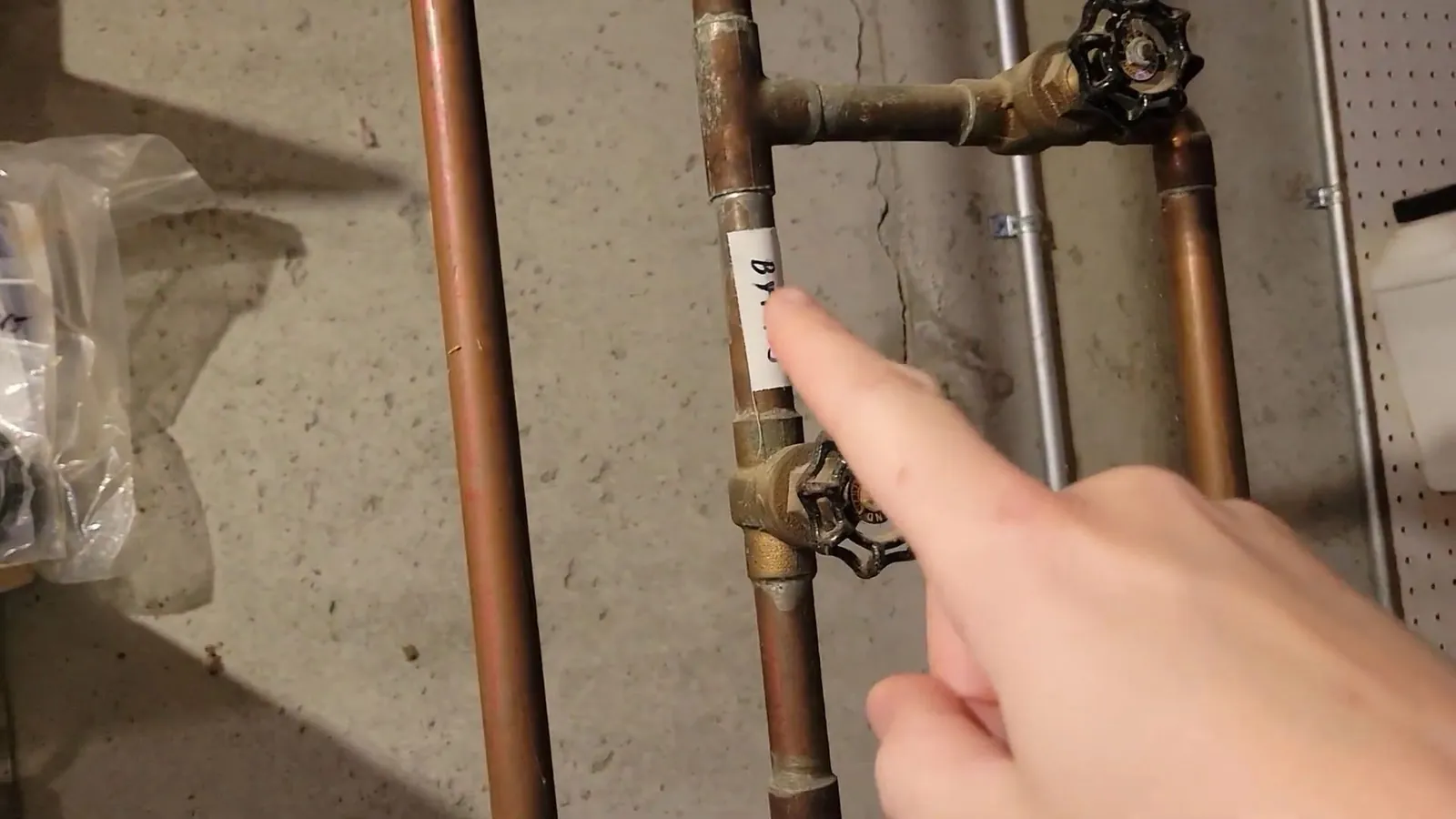
Close the main shutoff, then call. The main usually sits where the water line enters the house, often in a basement or utility closet. Once the water stops, open a low faucet to drain the pipes, keep clear of wet outlets and photograph the damage before anything is moved.
My water heater is leaking. Repair or replace?
Turn off the power or gas and close the cold water valve to the tank first. A leak at a fitting, valve or relief line can often be repaired. Water pooling under the tank itself usually means the tank has failed, and replacement is the usual answer. A plumber confirms which case applies before anything is ordered.
What should I do in the first hour after a leak soaks a room?
Stop the water at its source, then call. Do not stand in water near outlets or the electrical panel. Lift small items and furniture off wet carpet, and photograph everything for the insurer. Wet drywall and flooring need extraction and drying quickly, because the longer they stay wet the more has to be thrown out.
Which pipes freeze first, and what do I do?
Pipes in unheated garages, crawl spaces and exterior walls freeze first. Montgomery County's design values use a winter design temperature of 13 degrees Fahrenheit and a 30 inch frost line, so buried lines sit below the frost but exposed runs do not. If a pipe freezes, close the main before it thaws, open the nearest faucet and call a plumber if water appears.
I smell gas. Who do I call first?
Leave the building at once without switching anything on or off, then call 911 or the Washington Gas emergency line at 844-927-4427 from outside. Do not call a plumber first and do not search for the source. If the home runs on propane, call the propane supplier's emergency number. A plumber comes after the utility has made the area safe.
What happens when I call, and who answers?
We answer, ask what is happening and where, and a plumber serving your area handles the job. Have the street address ready and say whether the water is already shut off.
If a pipe has already split, what a plumber does about a burst pipe covers the repair. Soaked rooms are a separate job, described under water removal and drying after a leak. A tank that leaks at the base is covered under a water heater that leaks at the base, and the gas side is under gas line repair details.
Who handles it: WSSC, the gas utility or the homeowner
Ownership decides who gets the first call. These answers sort out the water utility, the owner and the plumber.
Who is responsible for a sewer backup, me or WSSC?
The owner is responsible for the sewer service from the property line to the building. WSSC maintains only the connection to its main. After a backup, WSSC recommends hiring a WSSC-registered plumber or sewer cleaner to clear the line. Its emergency number is 301-206-4002, and its claims office at 301-206-7095 handles cases where roots or a WSSC pipe caused the damage.
Who fixes a leak on the street side of my water meter?
WSSC maintains the water service from its main to the property line, so a leak on that stretch is WSSC's to fix. A leak past the property line belongs to the owner. If water is surfacing near the meter and the source is unclear, call WSSC at 301-206-4002 for the street side and a plumber for the house side.
How do I verify a plumber's license number?
Ask for the WSSC license number before work starts, then confirm it with WSSC's licensing office at 301-206-8588 or in its online licensee search. Maryland also requires a master plumber's license number on company vehicles, and the Maryland Board of Plumbing runs its own license lookup.
Does my home have lead or galvanized pipe?
WSSC publishes a pipe-type map that shows what it has recorded for customer-side service lines at an address. WSSC removed known lead pipes from its own distribution system in the early 2000s. Pipes inside the walls are a separate question that only an inspection answers, so look up the address before asking for a repipe quote.
My home is on well or septic. Can you help?
Only with the plumbing inside the house, such as fixtures, the water heater and supply lines. The tank, the drain field and the well and its pump belong to septic and well contractors, and the owner operates and maintains those systems. Parts of Potomac, including areas of Glen Hills, rely on them.
Which towns around Potomac can you send a plumber to?
Calls to this number cover ZIP codes 20854 and 20859. Other nearby towns have pages on this site, but the street address decides whether we can send a plumber. Call with the ZIP code and address, and we confirm.
The sewer page lays out who owns which stretch of sewer pipe and what to ask before a quote. The areas page lists the towns around Potomac with their own local notes.
Official sources worth bookmarking
- WSSC homeowner permit and license information
- WSSC guidance on sewer backups
- WSSC pipe type map
- Maryland Board of Plumbing license information
- Washington Gas contact and emergency numbers
- Miss Utility homeowner information
Not sure whose problem it is?
Phone with your address and say what you see, and a plumber serving your area takes it from there.
Permits, gas work and digging rules in Montgomery County
Some jobs need a permit, an inspection or a utility locate before a plumber starts. Ask about all three up front.
Do I need a permit to replace a water heater in Potomac?
Replacing a gas water heater does. WSSC issues gas permits and inspects the work in Montgomery County, a WSSC-licensed gasfitter must do the job, and an inspector should visit within 10 business days. WSSC's pages do not address electric units, so confirm that with WSSC Permit Services at 301-206-4003.
Who can repair or replace a gas line, and does it need a permit?
A WSSC-licensed gasfitter should do the work, and WSSC issues the permit and inspects it. Ask the gasfitter to pull the permit and book the inspection, which WSSC schedules at 301-206-4004. The homeowner or a representative has to let the inspector in.
Does my water heater need an expansion tank?
Often, but not always. A thermal expansion tank absorbs the pressure rise when heated water has nowhere to go, which happens when a check valve or pressure regulator closes the system. A plumber can test the pressure and say whether one is needed, and any local code requirement should be confirmed with WSSC instead of assumed.
Do I have to call 811 before a sewer or water line is dug?
Yes. Call 811 before any digging and wait for every utility to respond. Miss Utility sets the notice window when you call. Private lines such as sprinkler or septic lines are not marked, so ask the plumber how they will be located.
When is trenchless pipe lining better than digging up the sewer line?
Lining fits a pipe that is still continuous, with cracks, roots or small holes but no collapse, especially where the line runs under a driveway or mature trees. Digging is the answer when the pipe has collapsed or sagged badly. A camera inspection settles it, and either method needs a WSSC-registered master plumber and a WSSC inspection.
Permit questions come up most with permits for a new water heater and gas piping permits. Lining and digging are compared on the trenchless lining page.
Leaks, drains and fixtures: what is going on
Most calls start with a symptom. These answers explain the usual causes and what a plumber looks at first.
How do I use my water meter to check for a hidden leak?
Turn off every tap and appliance, then watch the meter's leak indicator for ten to fifteen minutes. If it keeps moving, water is escaping somewhere. Close the main shutoff at the house and look again. A dial that stops points to a leak inside the house, and one that keeps moving points to the service line before the shutoff.
What are the signs of a hidden slab leak?
Check the foundation first, because many Montgomery County homes sit over basements or crawl spaces, not slabs. In a slab room, the signs are a warm spot on the floor, the sound of running water with everything off, an unexplained jump in the water bill, damp flooring and low pressure.
Is a plumber needed to confirm a slab leak before any repair?
Yes. Warm floors and high bills have other causes, so a plumber should locate and confirm the leak with test equipment before anyone cuts concrete. Keep the written findings, because an insurer or inspector may ask to see them.
How often should drains be professionally cleaned?
There is no fixed interval. A drain that runs freely does not need cleaning on a schedule, and one that keeps slowing down does. Kitchen lines carrying grease and lines near tree roots may need attention every year or two, while others go many years. Repeated slowdowns call for a camera look in place of repeated cleaning.
Should I snake or hydro jet a repeat clog?
A cable clears a single blockage, and hydro jetting scrubs the pipe wall, so jetting suits grease or scale that keeps returning. A camera inspection should come first. It shows whether the cause is buildup, roots or a damaged section that no cleaning method will fix.
Why does my kitchen sink keep backing up?
Grease, food scraps and soap residue narrow the kitchen drain over time, and the blockage returns until the pipe wall is cleaned. If the dishwasher drains into the same line, water may show up there too. A backup that reaches other fixtures points to the main drain instead of the sink line.
What does a camera inspection show on a sewer line?
It shows the pipe material, joints, sags, cracks, roots and any collapse, along with the distance from the cleanout. The recording turns a guess into a repair plan and a clearer quote. Ask for the footage, because a second plumber may want to see it.
Why does my toilet run on its own?
A worn flapper or a fill valve that does not shut off is the usual cause. Lift the tank lid. If water spills into the overflow tube, the fill valve is set too high or failing. If the tank slowly empties into the bowl, the flapper is leaking. Both are routine repairs.
Is a running toilet worth fixing right away?
Yes, because a toilet that refills by itself loses water all day and the bill shows it. To find the cause, put a few drops of food coloring in the tank and wait without flushing. Color in the bowl means the flapper leaks, and a refill that never stops points to the fill valve. Both parts are routine repairs.
Does heavy rain affect plumbing and sewer drains in Potomac?
It can. Wet ground and full storm drains put extra load on the sewer system, and a basement floor drain is often where a backup shows first. Water that comes up in several fixtures at once suggests the main, and the owner is responsible for the sewer pipe from the property line to the house. Call WSSC on 301-206-4002 if the backup may involve its main in the street.
Can you install a new toilet or only repair one?
Both. Replacement makes sense when the bowl is cracked, the porcelain is worn or the toilet clogs repeatedly. A plumber also checks the shutoff valve and the floor flange so the new toilet seats and seals properly.
Why is my disposal humming or leaking?
A hum without spinning usually means jammed blades. Switch the unit off at the wall, turn the blades by hand using the slot underneath, then press the reset button. A leak from the bottom or side usually means a failed seal and calls for replacement, while a leak at the drain flange or hose can sometimes be tightened.
Is it worth repairing a dripping faucet or replacing it?
Repair first when the faucet is in good shape and the cause is a washer, cartridge or seal. Replace it when the finish is worn, parts are no longer made or repairs keep coming back. A steady drip wastes water and raises the bill, so fix it soon either way.
The detailed pages are meter checks and leak location, slab leak locating, drain cleaning visits and jetting versus cabling. Fixtures have their own pages: toilet repair and replacement, disposal jams and leaks and faucet drips and replacements.
Water heaters, pipes and what jobs cost
Replacement decisions, scale from hard water and why prices come as ranges.
How long does a water heater last, and when do I replace it?
A tank water heater typically lasts 8 to 12 years. WSSC reports that Potomac River water averages about 120 to 130 mg/L of hardness, and scale can shorten tank life, which is why a yearly flush and an anode check matter. Replace sooner if the tank leaks, rust shows in the hot water or repairs start to pile up.
How can I tell my water heater is near the end of its life?
Check the age on the label first. Rust-colored hot water, a rumbling or popping sound, moisture around the base and a tank that no longer keeps up are the usual signs. A leak from the tank itself cannot be repaired, so plan the replacement and shut off the water and power or gas to the unit until the plumber arrives.
How often should a tankless water heater be flushed in hard water?
Follow the manufacturer's maintenance schedule for the model, which usually calls for more frequent flushing where water is hard. Potomac's supply averages about 120 to 130 mg/L, enough to scale a heat exchanger over time. Flushing needs isolation valves, so ask whether the unit has them.
When is a repipe worth it compared with repairing one leak?
A repipe is worth considering when leaks keep appearing in different spots, the pipes are galvanized or near the end of their life, or pressure and water quality have dropped throughout the house. One leak in otherwise sound pipe is usually a repair. WSSC requires a WSSC-licensed plumber for interior repiping.
What does water damage restoration include, and what does it not?
Restoration here means water extraction, drying and dehumidifying the affected area. It does not include rebuilding. Replacing drywall, flooring and paint is separate reconstruction work. Stop the source first, and photograph the damage for the insurer before drying starts.
How much does plumbing work cost in Potomac?
Cost depends on the job, access and materials, so honest prices come as ranges instead of one number. Line length, depth, permit and inspection requirements, and whether walls or concrete must be opened all move the total. A plumber should give a written quote before work starts.
Heater decisions continue under tankless maintenance, and pipe decisions under repipe or repair. The cost guide, how plumbing prices are built, explains each range in more detail.
Not answered above? Call and describe the problem
Call and describe what is happening. A plumber serving your area takes the call, and the plumber can answer questions about your own house that no general page can.