
Potomac, MD · Montgomery County
Disposal Humming, Jammed or Leaking? Garbage Disposal Repair and Installation in Potomac, MD
A disposal that hums, jams or leaks has a short list of causes. This page helps you find the source, choose between repair and a new unit, and avoid the habits that clog the line.
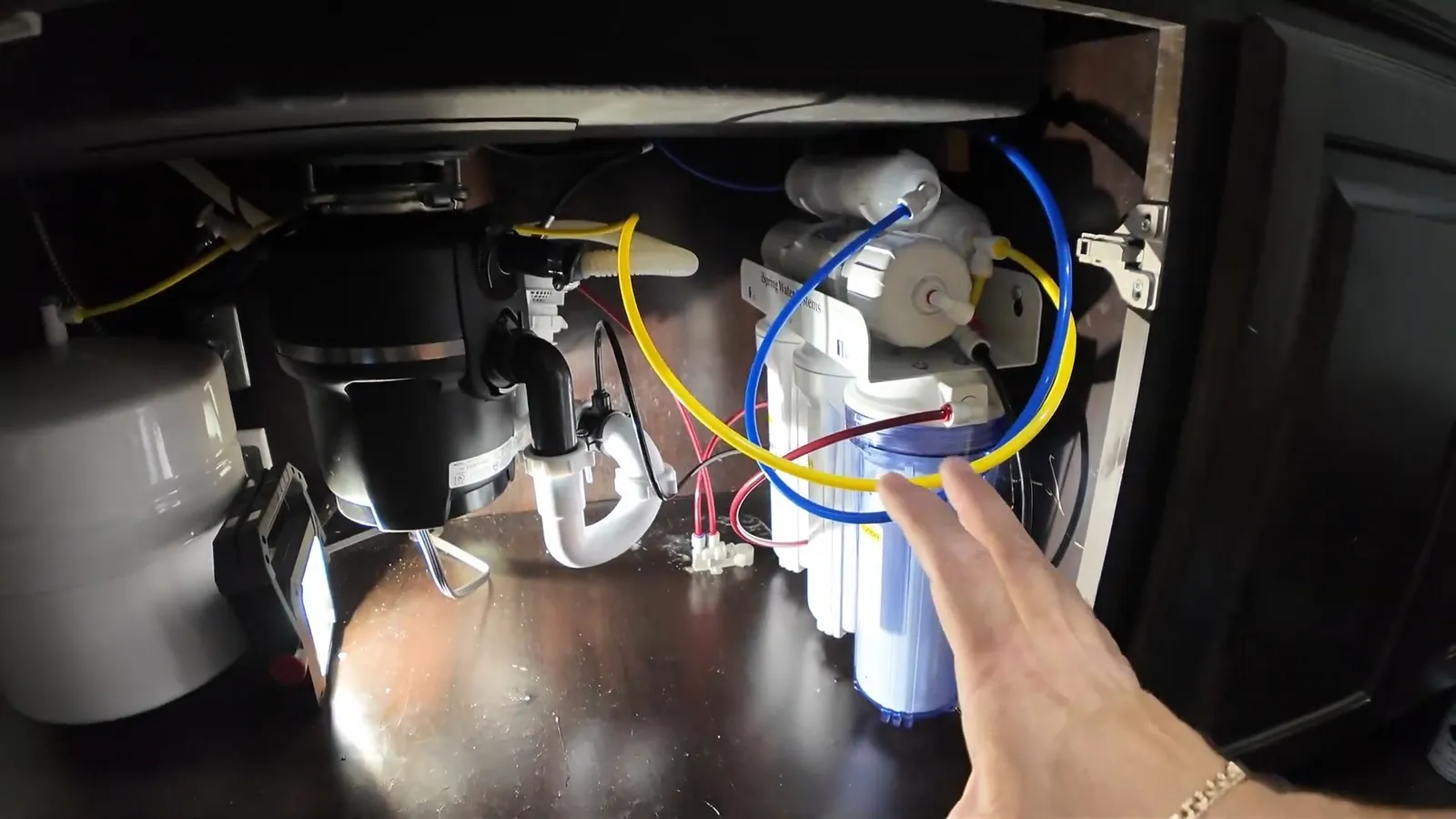
What a humming or silent disposal usually points to
A disposal fails in a few recognizable ways, and each points to a different cause. Note what you hear before touching anything, and switch the unit off at the wall.
| What happens | Usual cause | What to do |
|---|---|---|
| Hums but the blades do not turn | Something jammed against the flywheel | Power off, then clear the jam |
| Nothing happens at all | Tripped reset button or a dead outlet or switch | Check the reset button, then the circuit |
| Spins but drains slowly | Clog past the disposal in the drain | Treat it as a drain problem |
| Runs loudly with a grinding sound | A foreign object in the chamber | Power off and retrieve it |
| Smells foul after cleaning | Residue in the chamber or splash guard | Clean the splash guard and flush |
Never put a hand into the chamber, even when the unit is off. Use tongs or pliers, and cut the power first at the wall switch and, for any work underneath, at the breaker.
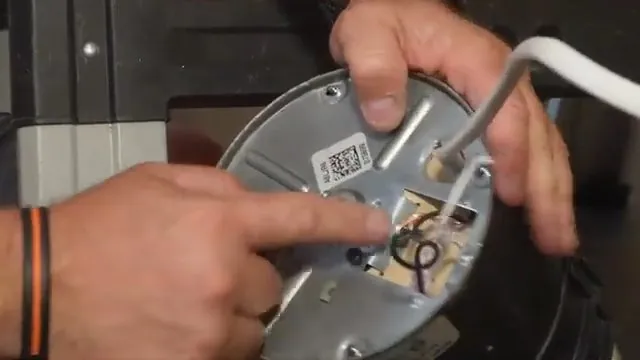
Leaking disposal: find the source before you buy a part
Water under the sink does not always come from the disposal. Dry the cabinet, wipe the unit, then run water and the dishwasher separately. Where the first drop forms tells you what is failing.
- Top of the unit, around the sink flange: the mounting seal has failed and can be re-seated or replaced.
- Side of the body or the bottom: the housing has failed and the unit is usually replaced.
- The small hose from the dishwasher: the clamp or the hose has failed, and it is a small repair.
- The discharge pipe and trap joints: a loose connection, a worn gasket or a misaligned pipe.
- Only when the sink drains: the leak may be at the sink basket or drain, not at the disposal.
A leak from the housing cannot be patched. Water that has run down the cabinet may have soaked the floor, so check the base of the cabinet for swelling or stains. If the cabinet floor is wet, drying a soaked cabinet base covers the next step.
Disposal leaking under the sink?
Switch it off, dry the cabinet and call. A plumber serving your area takes it from there.
Repair or replace the unit
A jam or a tripped reset is a repair. A leaking seal or a loose hose clamp is a repair. A cracked housing, a seized motor or a unit that keeps tripping the breaker is a replacement. Age matters less than what failed.
- What failed: the seal, the hose, the housing or the motor?
- How old is the unit, and is it under warranty?
- Is the repair a fraction of a new unit, or close to it?
- Is the unit the right size for how the household uses it?
- Do the mounting parts and the drain fittings need replacing too?
A household that grinds a lot of food scraps may want a stronger motor than a basic unit offers. A household that rarely uses it may need nothing more than a seal. Ask the plumber to match the unit to the use.
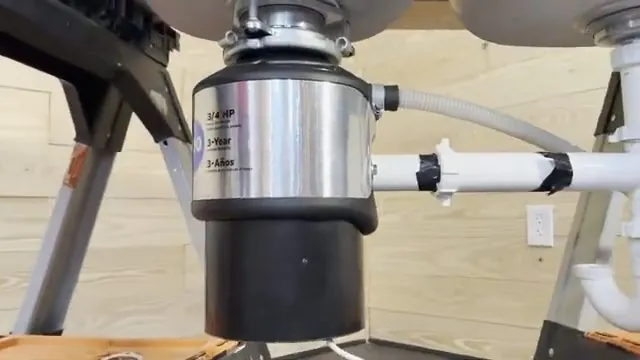
Installing a new disposal: what happens under the sink
Replacing a disposal in the same spot is a modest installation. The plumber disconnects the old unit, removes the mounting assembly, installs the new flange and mount, and connects the drain and the dishwasher hose. Electrical connections come last.
The questions that matter are the fit of the discharge pipe, the dishwasher connection and the power supply. If the unit is new to the sink, the plumber also has to check the drain and the trap, and the electrical work may need someone qualified to handle it. WSSC lets homeowners do limited plumbing work under Section 106.9 of its plumbing code but requires most projects to be done by a WSSC-licensed plumber, and its published pages do not address disposal permits, so ask the plumber whether a permit applies. Permit Services is at 301-206-4003.
- Is the new unit the same mounting type as the old one?
- Is there an outlet or a switch for it, and who handles the electrical connection?
- Does the dishwasher drain connect to the disposal?
- Are the trap and drain pipes in good shape?
- What is the warranty on the unit and on the labor?
What goes down the disposal, and what does not
A disposal is not a trash can. WSSC says fats, oils and grease build up in sewer pipes, restrict flow and can back up into homes. Its advice is to can the grease, cool it and toss it in the trash.
Grease poured down a sink with a disposal still goes into the line. If your drain is already slow, clearing the kitchen line may fix what a new disposal will not.
- Keep grease, oils and fat out of the sink.
- Avoid fibrous scraps and large amounts of starchy food at once.
- Run cold water while the unit runs and for a few seconds afterward.
- Keep bones, pits, glass, metal and utensils out of the chamber.
- Use the cleaning method in the manual instead of harsh chemicals.
For wide price ranges on repair and installation, see the disposal repair and installation costs.
Jam, hum and leak questions
Why does my garbage disposal hum but not spin?
A hum with no spin usually means something is jammed against the flywheel. With the power off and the unit unplugged or the breaker off, a plumber or a careful owner can turn the flywheel with the wrench slot underneath. Never put a hand in the chamber.
Where is my garbage disposal leaking from?
Dry the unit, run water and watch. A leak at the top is usually the flange seal, a leak from the side points to the body, a leak at the small hose points to the dishwasher connection, and a leak at the pipe joints points to the drain. The location decides the repair.
Is it better to repair or replace a leaking disposal?
A loose connection or a worn seal can be repaired. A leak from the body of the unit usually means the housing has failed, and the unit is replaced. Ask the plumber where the water comes from before agreeing to either.
Disposal dead or leaking?
Switch it off at the wall switch and call. A plumber serving your area takes it from there.