
Potomac, MD · Montgomery County
Warm Floor or Running-Water Sound? Slab Leak Repair in Potomac, MD Begins With a Meter Test
A warm patch on the floor or a water meter that will not stop can mean a leak under a concrete slab. This page shows how to check whether your home even has pipes there and what a meter test tells you.
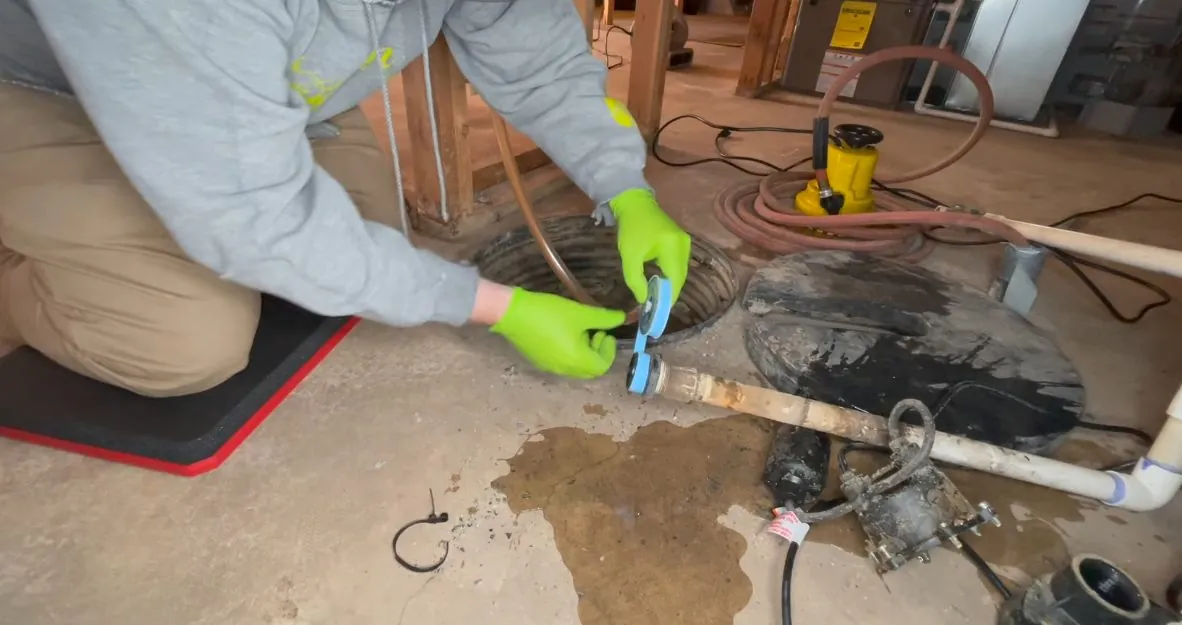
Does your Potomac home have pipes under a slab at all?
A slab leak is a leak in a water line that runs under or through a concrete slab floor. Whether your house has one is the first question, because the answer decides whether this page is about your problem or whether the leak is somewhere easier to reach.
A house built over a full basement or a crawl space usually runs its supply pipes through the joists overhead, where a leak shows up as a stain and can be reached. Slab-on-grade construction is different. It is typical of ground-floor additions, converted garages, sunrooms and some single-story homes, and the pipes may sit in or under the concrete.
- Look for a basement or crawl space under the room where you noticed the problem.
- Check whether the room is an addition or a former garage, which are often built on a slab.
- Look for exposed pipes in the utility room, where they enter the floor or the wall.
- Ask the plumber to tell you where the supply lines run before diagnosing.
If your home is over a basement, a warm or wet spot may be a leak in a different line, and the pinpointing a hidden leak page is the better place to start.
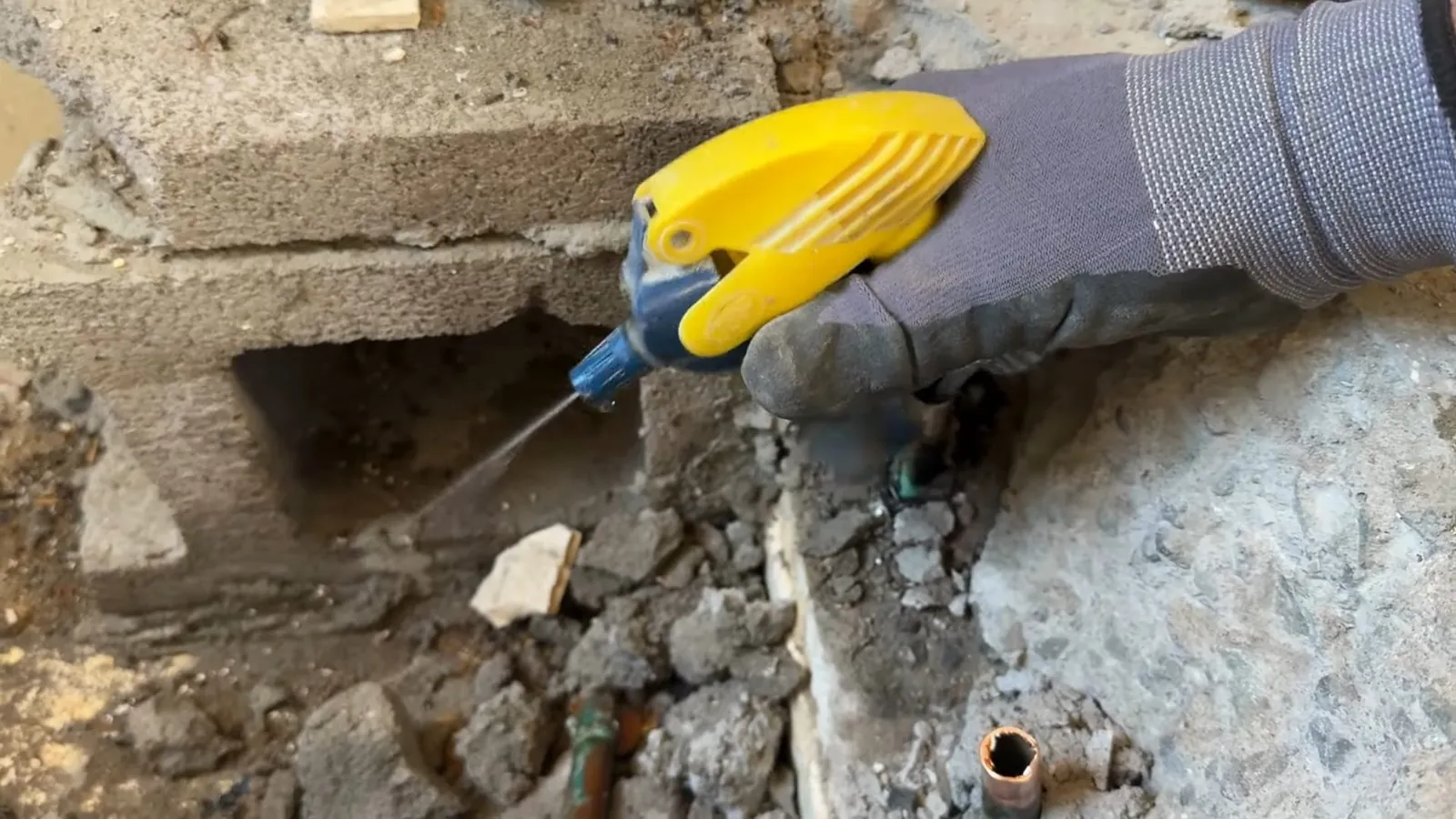
Slab leak signs, and the look-alikes that point elsewhere
No single sign proves a slab leak, but a cluster of them makes one likely. The table separates the signs that fit a leak under the floor from the ones that point to another cause.
| What you notice | Fits a slab leak when | May be something else when |
|---|---|---|
| A warm spot on the floor | It stays warm when no hot water is running and the area is small | Radiant heat or a sunny window explains it |
| Sound of running water | You hear it when every fixture is off | A toilet, ice maker or irrigation is running |
| A high water bill | Use did not change and the meter moves with everything off | Seasonal watering or a running toilet |
| Damp flooring or baseboards | The wet area grows from the floor up | The source is a roof, window or wall leak |
| Low hot water pressure | Only the hot line is weak | The water heater or a fixture screen is the cause |
A leak in the hot line often shows as a warm floor, because the leaking line heats the concrete around it. A cold line leak shows more as dampness and a rising bill.
The meter test that separates a slab leak from other leaks
A meter test takes about half an hour, and it tells you which part of the system to look at. The water meter at the street belongs to the utility, so read it but do not adjust it.
- Turn off every fixture in the house, including the dishwasher, washing machine and ice maker.
- Read the meter and note the low-flow indicator, a small dial or triangle that spins at a slow leak.
- Wait about 30 minutes without using water, then read it again.
- If the reading moved or the indicator is turning, water is leaking somewhere.
- Close the main shutoff at the house, then check the meter again. If it still moves, the leak is between the meter and your house.
That last step matters in Potomac because WSSC maintains the water service from its main to the property line. A leak beyond that line is the owner's, and one before it is WSSC's, so a meter that keeps running with the house shutoff closed is a reason to call the 24-hour line, 301-206-4002, before a plumber starts digging.
If the meter stops when the house shutoff is closed, the leak is inside the house or in the pipe between the shutoff and the fixtures. That is where slab leaks live, and it is the result to tell the plumber when you call.
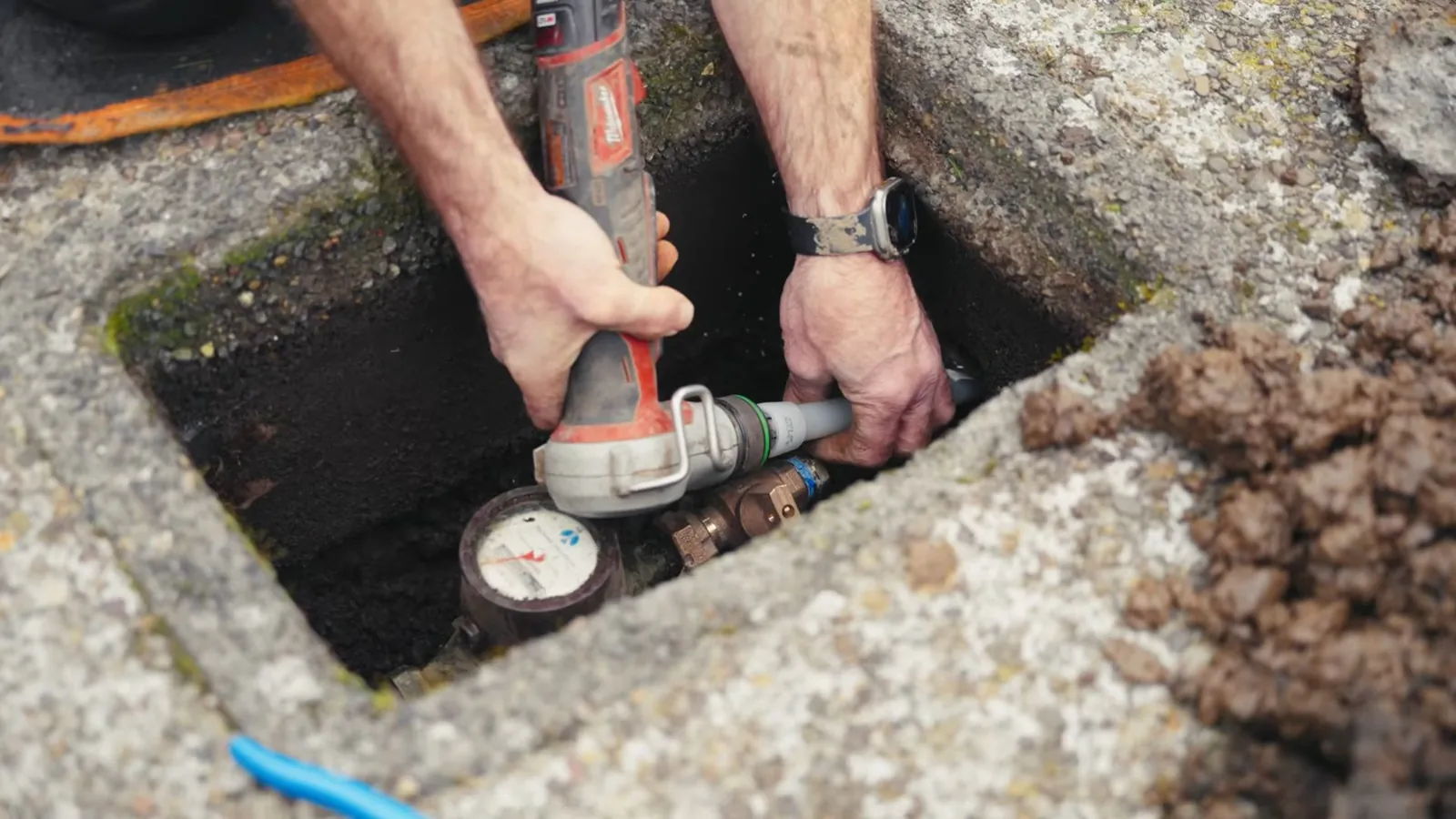
Meter still moving with everything off?
Share the meter test result when you call. A plumber serving your area takes it from there.
Spot repair, reroute or repipe: three ways to fix a slab leak
Once a plumber has located the leak, there are three realistic paths. Each has a different cost and a different amount of disruption, and the right one depends on how many leaks the system has had, what material the pipe is and where the line runs.
| Option | What it involves | Best fit |
|---|---|---|
| Spot repair | Open the floor over the leak, repair the pipe, patch the slab | One leak in an otherwise sound line |
| Reroute | Abandon the leaking section and run a new line overhead or through walls | A leak in an inaccessible run, or repeated failures in one section |
| Repipe | Replace the supply lines throughout the house | Several leaks, or old pipe that is failing in more places |
When the leaking line is a drain or sewer pipe under the slab or yard, trenchless relining without opening the floor can sometimes be an option. Supply lines are not lined this way. For a drain line, a camera first confirms where the pipe has failed, and a resin-soaked liner is then pulled through the old pipe and cured in place, so the slab stays closed.
Rerouting and repiping are interior repiping under WSSC's rules, which say most plumbing projects must be done by a WSSC-licensed plumber. Ask for the license number and whether a permit is needed. The rerouting or repiping page explains what a whole-house job involves.
Spot repairs look cheaper because they are smaller, but a second leak in the same line usually changes the math. Ask the plumber to tell you what they saw in the pipe near the leak. If it looks worn along its length, one repair may only move the problem.
Access, insurance and what to get in writing
A slab leak that runs for a long time can wash soil from under the slab or keep the ground around the foundation footing wet. New cracks in walls or floors, doors that begin to stick and a floor that feels uneven are signs worth reporting. A plumber cannot judge structural safety, so ask for the finding in writing and bring in a structural engineer if those signs appear.
A slab leak repair opens the floor, so decide before work starts what will be restored and by whom. The plumber repairs the pipe and may patch the concrete, but flooring, tile and finishes are normally a separate trade.
Water that has soaked the structure also needs attention. If the leak has wet floors or walls, see drying and restoration for what removal and drying involve. Your insurer may want the plumber's written location report before approving any claim.
- The plumber's name, license number and the date of the visit.
- The result of the leak location: which line, hot or cold, and where it sits.
- A written description of the repair option chosen and what was not repaired.
- Photos of the opened area and the damaged pipe before it is closed.
- Whether the work needed a permit and who is responsible for it.
The cost page explains how spot repair and reroute costs differ.
Common questions about leaks under the floor
What are the most common signs of a slab leak?
A warm spot on a floor, the sound of running water when everything is off, a water bill that climbs with no change in use, a meter that keeps moving, and damp or lifting flooring are the usual signs. Several of them together are more telling than any one.
Is a plumber needed to confirm a slab leak before any repair?
Yes, in practice. Many signs of a slab leak also fit a leak in a wall, in the ceiling below or in the line outside the house, so a plumber should locate the leak and record where it is before anyone opens a floor.
Does every house have a slab leak risk?
No. Supply pipes run through or under a concrete slab only where the house, an addition or a garage was built on one. A home over a full basement or crawl space usually runs its pipes overhead, where a leak is easier to find and fix.
Report your meter test result by phone
Tell us what you noticed and what the meter test showed. It routes you to a plumber serving your area.