
Potomac, MD · Montgomery County
Digging Up the Yard or Lining the Pipe? Trenchless Pipe Lining in Potomac, MD Explained
Lining a sewer pipe in place can spare a lawn or driveway, but only when the pipe still holds its shape. This page explains when it works, when it does not and what to ask before agreeing.
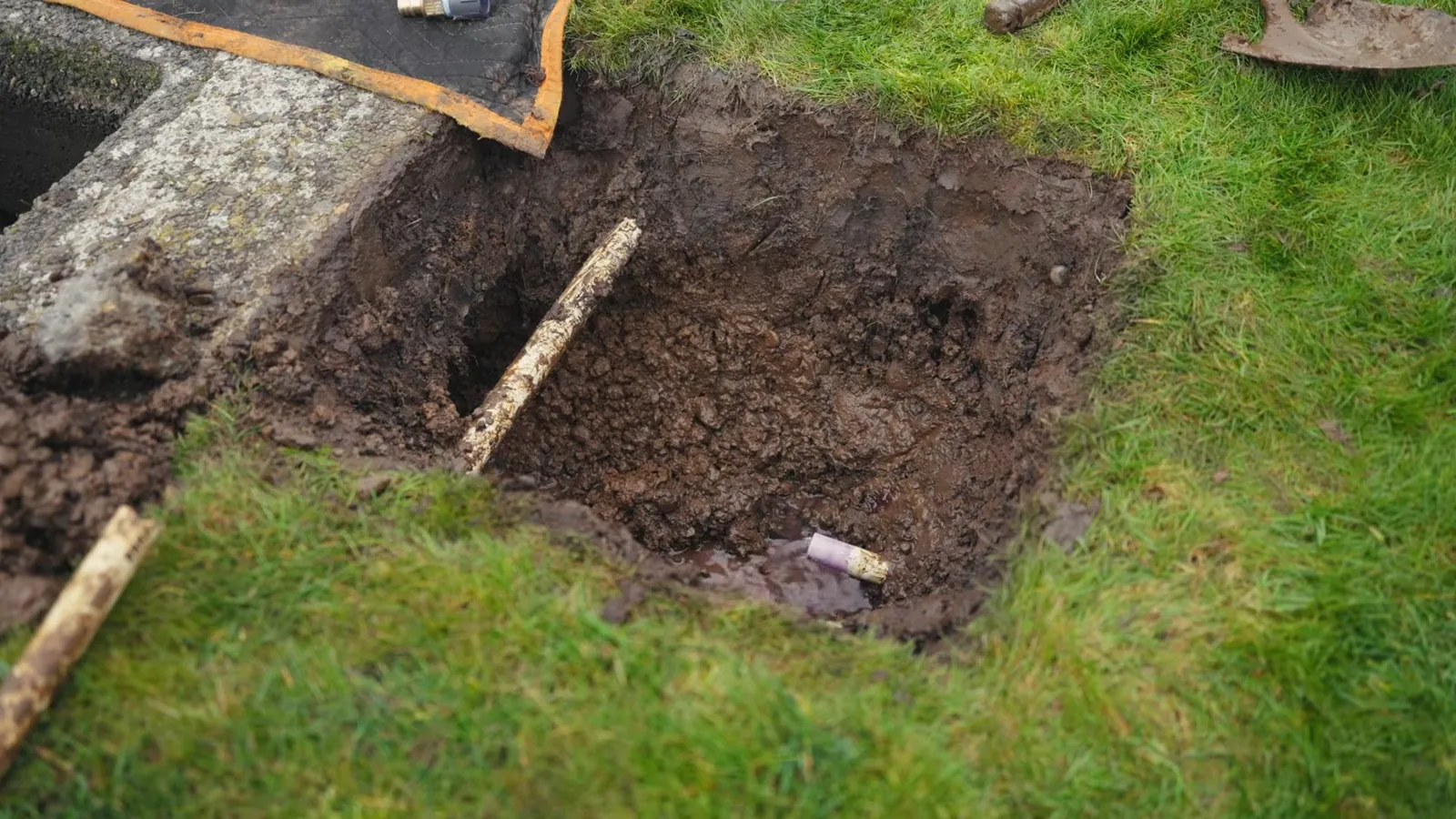
Can this pipe be lined? What a liner needs to work
Trenchless lining sounds like a way to avoid a trench in every case, but it only works on a pipe that still has its shape. The method pulls a resin-soaked liner into the old pipe and cures it into a new pipe inside the old one. It needs an open, continuous path to follow.
The camera decides. A pipe with cracks, root-prone joints or surface corrosion is a good candidate. A pipe that has collapsed, separated at a joint or developed a belly that holds water is not, because a liner follows the pipe's shape, including its flaws.
- Cracked or root-prone pipe that still holds its round shape: usually a candidate.
- Rough, corroded pipe that is intact: usually a candidate.
- A section that has collapsed or crushed: needs digging.
- A bad belly or low spot that holds water: lining will follow the sag, so repair the grade first.
- A joint that has pulled apart or an offset that blocks the path: needs correction first.
Ask the plumber to show you the footage that supports the choice. A recommendation to line without footage is a guess.
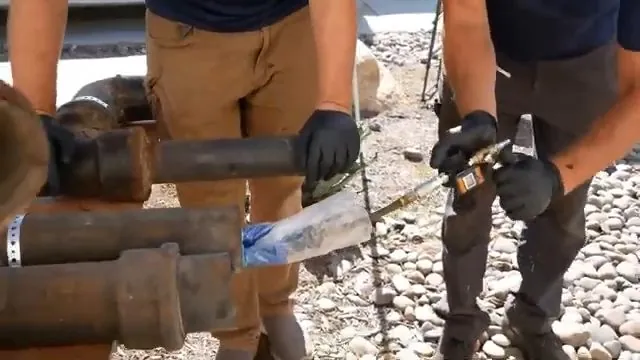
Lining versus open trench, side by side
Both methods fix the same problem, and the choice often comes down to what is above the pipe. A pipe under a deck, a patio, a mature tree or a finished driveway costs more to dig and restore than one under open lawn.
| Question | Trenchless lining | Open-trench repair |
|---|---|---|
| What gets dug up | Small access pits at each end of the section | A trench along the full damaged run |
| Yard and hardscape | Mostly untouched | Needs full restoration |
| Works on a collapsed pipe | No | Yes |
| Corrects a belly or bad slope | No | Yes, by regrading the pipe |
| Typical disruption | Short, localized | Longer and wider |
| Camera before and after | Required to confirm the result | Recommended |
Neither is better in every case. A lined pipe under a driveway may spare a lot of restoration work, while a collapsed pipe under a lawn is a straightforward dig. The goal is to match the method to the damage, and to be honest when one will not work. For the traditional route, see traditional sewer line repair.
Lining or digging? Ask for a camera inspection first
Ask for a camera inspection first, and a plumber serving your area takes it from there.
What happens before lining, and what should be checked after
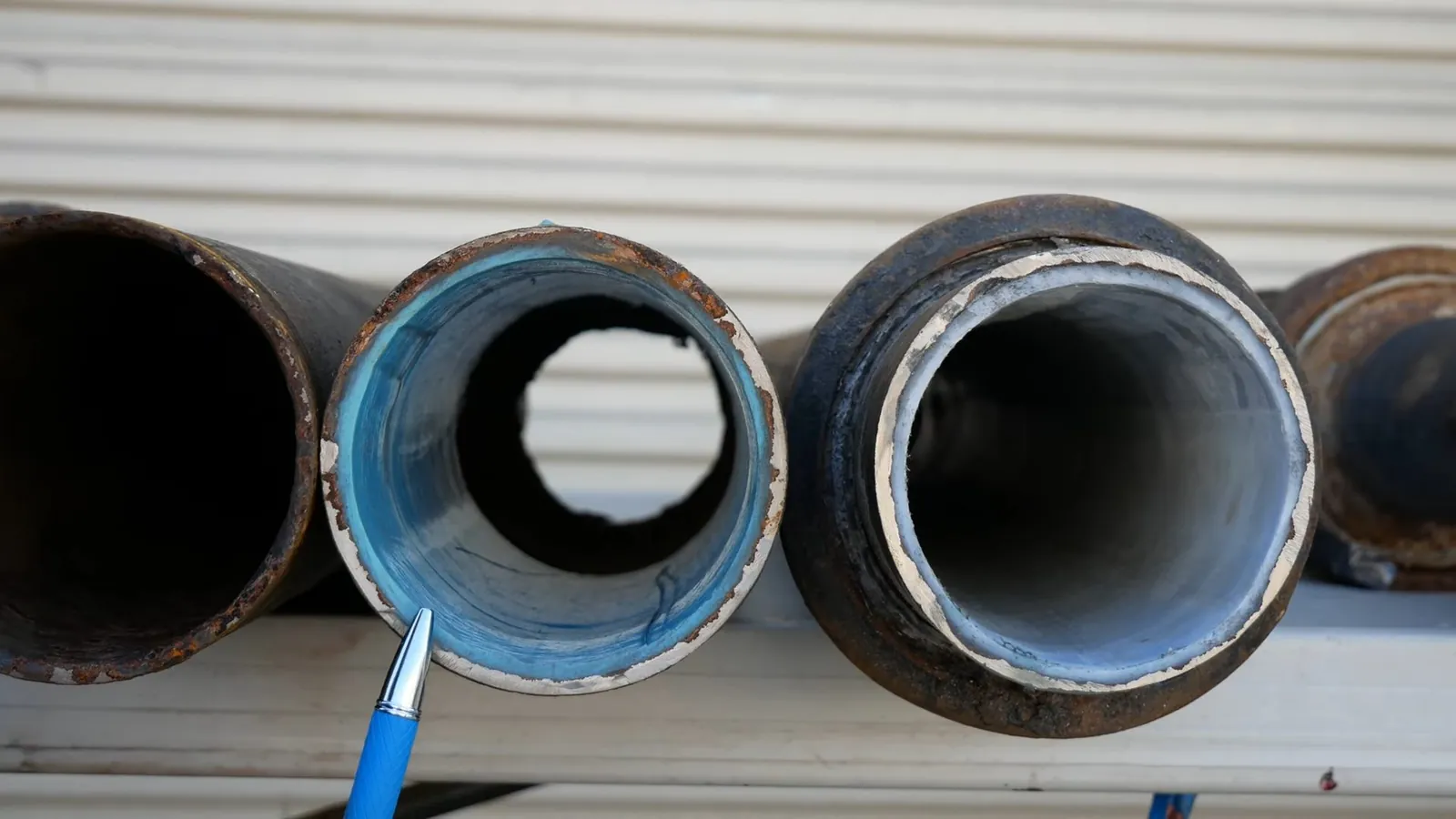
A liner needs a clean pipe. The line is cleaned first, often with high-pressure jetting, so the resin bonds to the pipe wall and the liner sits flush. Roots are cut back and debris removed. A camera then confirms that the path is clear.
After the liner cures, the plumber should run the camera again. The footage should show a smooth, continuous surface, openings reinstated at any connections and no folds or wrinkles. Ask for both the before and after recordings.
- Was the line cleaned and inspected immediately before lining?
- Are all branch connections reopened and shown on the after footage?
- How many feet were lined, and between which access points?
- Is there a written warranty on the liner, and what does it cover?
If the line passes under a slab, the same method is sometimes used to reroute or line a pipe in place. That situation has its own concerns, covered under slab leak rerouting.
Permits, inspection and 811 for a no-dig job
In Montgomery County, WSSC states that only a registered WSSC Master Plumber may excavate or repair underground sewer pipes, and that the plumber must secure a permit and have WSSC inspect the work. WSSC's published pages do not describe lining in particular, so do not assume the rules are different. Ask the plumber how the job will be permitted, and confirm with WSSC Permit Services at 301-206-4003.
Trenchless work still digs access pits, so Miss Utility applies. Call 811 at least two full business days and no more than ten days before the work. It marks public lines, but not private ones such as sprinkler lines. Tell the plumber what is buried in the yard.
What decides whether lining actually saves money
Lining is not automatically cheaper. It saves most where digging would be expensive: under a driveway, a patio, a deck or a mature tree whose roots and canopy you want to keep. It saves least where the pipe runs under open lawn that is easy to restore.
Four things move the comparison. The length of the damaged run, because liner is installed by the foot. The number of access points, because each pit adds labor. The number of side connections that must be cut back open after the liner cures. And the condition of the host pipe, because a pipe that needs spot repairs first adds to the lining job rather than replacing it.
- How many feet of liner, and how many access pits?
- How many connections need to be reopened?
- What repairs must happen before lining?
- What would the open-trench alternative restore, and what would that cost you in landscaping or paving?
Ask for both options written side by side, so the comparison is about your yard and not a general rule. A plumber who only offers one method deserves a second question about why.
Records to keep for a lined pipe: permit, footage and liner
Because a liner is hidden once it is in, the records matter. Ask for the following and keep them with your house documents.
- The permit number and the WSSC inspection result.
- The before and after camera footage with distance markers.
- The liner product, its thickness and the footage lined.
- The written warranty terms and who stands behind them.
- A drawing or note showing where the access pits were and how they were restored.
For wide price ranges on lining and trench repair, see the trenchless lining price guide.
What homeowners ask about no-dig repairs
When is trenchless pipe lining recommended over traditional excavation?
Lining suits a pipe that is cracked, root-prone or corroded but has not collapsed or lost its shape. It is installed through existing access points. A pipe with a bad sag, a collapsed section or a missing piece usually needs digging.
Does lining reduce the size of my sewer line?
A liner sits inside the old pipe and reduces its inside diameter slightly, but a smooth lining often flows as well as or better than a rough old pipe. Ask the installer to show that the lined diameter still suits your house.
Does trenchless repair still need an inspection?
Ask. WSSC requires a permit and inspection for underground sewer repair by a registered master plumber, but its published pages do not describe lining. Confirm with WSSC Permit Services at 301-206-4003 before work starts.
Weighing a lined pipe against a trench?
Share the camera findings if you have them. A plumber serving your area takes it from there.