
Potomac, MD · Montgomery County
Tankless Water Heater in Potomac, MD: Descaling, Gas Supply and Error Codes
A tankless heater fails differently from a tank. This page covers scale and descaling, what a gas unit demands from your house, and when a small point-of-use unit makes more sense.
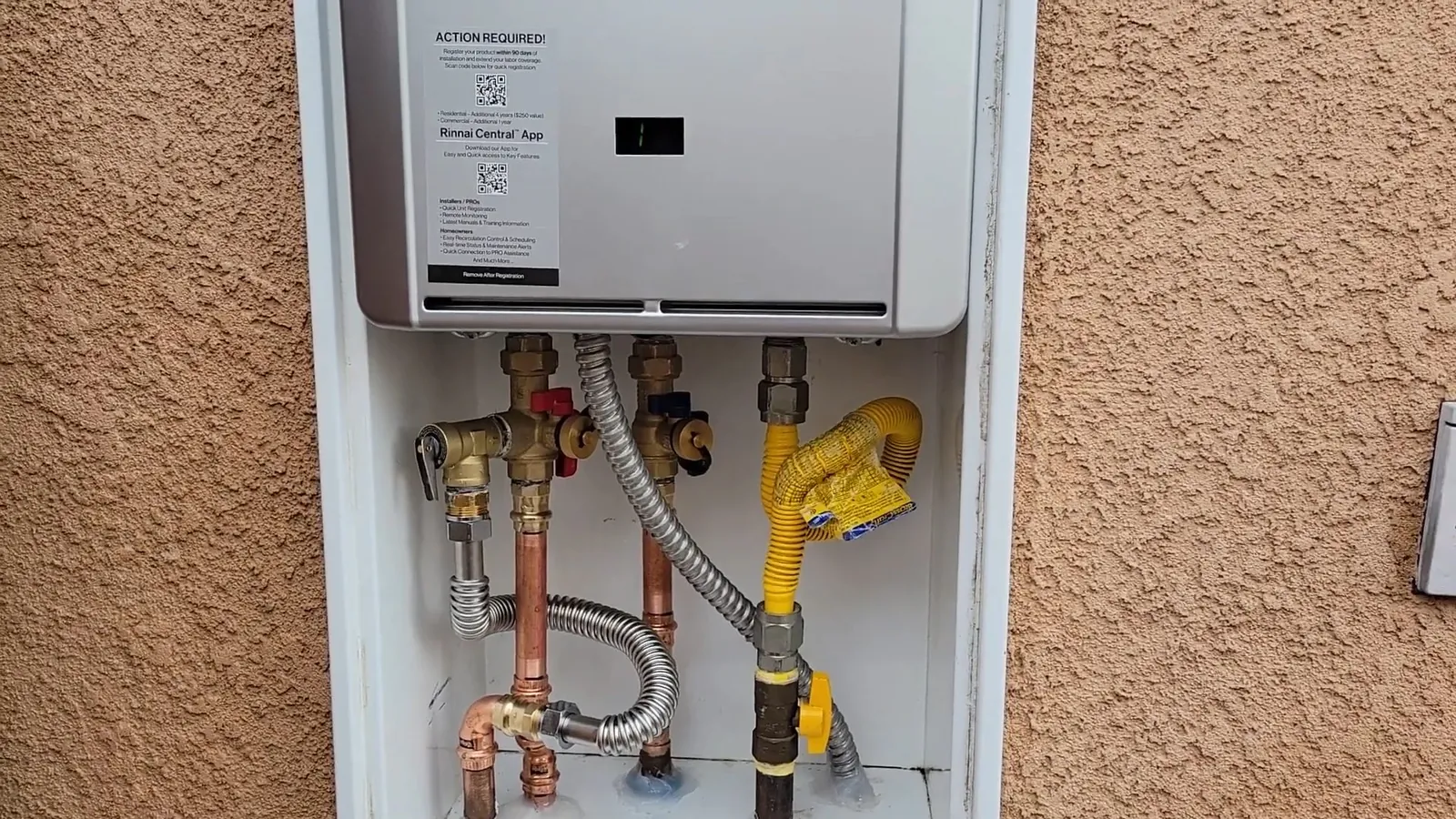
Cold water, error code or no hot water: what the symptom means
A tankless heater heats water as it flows, so its failures look different from a tank's. Instead of running out, it may flicker between hot and cold, shut off mid-shower or display a code and refuse to fire. The cause is often one of a short list.
| Symptom | Likely cause | What to do |
|---|---|---|
| Water runs lukewarm or cold at a normal flow | Scale on the heat exchanger or a clogged inlet filter | Ask for a flush and a filter cleaning |
| The unit shuts off during a shower | Low flow, a venting problem or overheating from scale | Note the code and call |
| An error code appears and the unit will not fire | Ignition, vent, sensor or gas supply problem | Do not reset repeatedly; call |
| Hot water takes a long time to arrive | Long pipe run from the unit to the fixture | Ask about a recirculation option |
| Noises or clicking at the unit | Scale, fan or igniter wear | Have it inspected |
If you smell gas near a gas tankless unit, leave and call 911 or the gas utility first. For Washington Gas customers the emergency line is 844-927-4427.
Hard water and the flush schedule
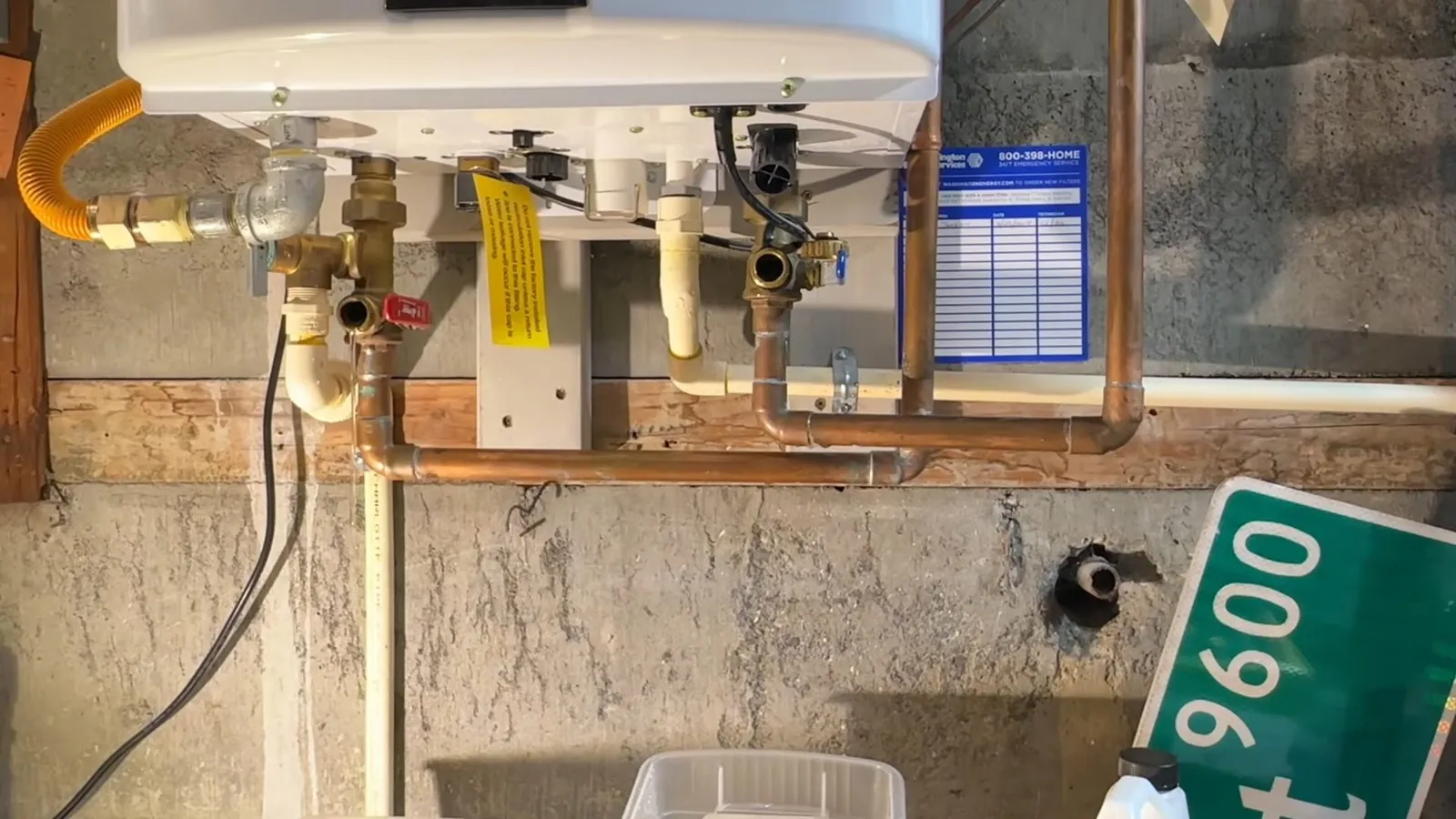
A tankless heater passes all of its water through a small heat exchanger, so scale hits it harder than it hits a tank. WSSC filters Potomac River water that averages about 120 to 130 mg/L of dissolved calcium and magnesium, roughly 7 grains per gallon. Heating that water deposits scale inside narrow passages.
Scale reduces flow and efficiency, and eventually triggers error codes. The cure is routine flushing with a descaling solution, following the manufacturer's manual for the interval and the procedure. Ask the plumber to show you the isolation valves that make flushing possible. A unit installed without them is harder to maintain.
Tankless unit down?
Give us the make and the code, and a plumber serving your area takes it from there.
Can your house support a tankless unit?
A tankless heater moves a lot of heat quickly, and that demands supply. A gas unit often needs a larger gas line than a tank, plus proper venting and a condensate drain for high-efficiency models. An electric unit may need a large dedicated circuit that an older panel cannot supply.
Washington Gas states that each customer is responsible for the gas piping on their side of the meter. That means upgrading the line to a tankless unit is the owner's to arrange, through a WSSC-licensed gasfitter, and it may need a permit of its own.
- Is the existing gas line large enough for the unit's rating?
- Where will the vent terminate, and is the route allowed?
- Is there a drain for condensate?
- For electric units: does the panel have the capacity and space?
- What will be reused from the old tank installation?
A plumber should answer these before quoting. A price given without them is a guess.
Point-of-use and undersink units: a smaller answer
Not every tankless unit serves a whole house. Point-of-use units are small electric heaters that sit under a sink or near a single fixture and heat water only for that tap. They suit a distant bathroom, a guest suite or a kitchen where the hot water takes too long to arrive.
A point-of-use unit does not replace a main water heater. It trims the wait at one fixture and usually plugs into an existing circuit. Ask what flow it supports, whether the circuit has room for it, and whether it is meant for hand washing or for a shower. Repairs are typically simple, but a failed unit is often replaced rather than repaired.
- Which fixture will it serve, and what is the flow need?
- Does a suitable outlet or circuit already exist?
- How much hot water does it deliver, and how quickly?
- What does the warranty cover?
Repair, replace or leave it alone
Many tankless problems are maintenance problems. A unit that has never been flushed in hard water, or a clogged inlet filter, can mimic a failed part. Start with the simple checks before replacing the unit or its circuit board.
Replacement becomes the better answer when the heat exchanger has failed, when repairs have repeated, or when parts are no longer sold for the model. Ask the plumber what failed, whether the part is covered by warranty and what the next likely failure is.
- What error code appeared, and when did the problem start?
- When was the unit last flushed, and was the inlet filter cleaned?
- Is the unit still under warranty, and does the warranty require a licensed installer's records?
- Is a part available, and how long will the wait be?
- Would an isolation valve kit make future flushing easier?
Keep the service records. A warranty claim is easier when you can show the flush dates and the installation paperwork.
Permit, inspection and the paperwork to keep
In Montgomery County, installing or replacing a gas water heater, tank or tankless, needs a WSSC permit and an inspection within 10 business days, and WSSC says it should be done by a WSSC-licensed individual. The licensee is responsible for the inspection, and a missed one can affect the manufacturer's warranty. WSSC's published pages do not say whether an electric tankless unit needs a permit, so confirm with Permit Services at 301-206-4003.
- The WSSC permit number and the inspection result.
- The unit's model, serial number and install date.
- The flush procedure and interval from the manual.
- The warranty terms and who services the unit.
If the existing heater is a tank that is nearing the end, choosing a replacement heater compares your options. For ranges, see the tankless installation cost ranges.
Tankless questions answered before you buy or call
How often should a tankless water heater be flushed in hard water?
Follow the manufacturer's manual, which gives the interval for your model. WSSC's water averages about 120 to 130 mg/L hardness, so scale builds on the heat exchanger over time, and many households flush once a year or more often.
Why does my tankless heater show an error code and go cold?
Common causes include scale on the heat exchanger, a clogged inlet filter, a vent or combustion air problem, or a supply that is too small. Note the code, check the manual, and have a plumber test the unit before replacing parts.
Can any house use a tankless water heater?
Not without checking. A gas tankless unit needs enough gas supply, proper venting and the right condensate drain. An electric unit needs a heavy circuit. The plumber should confirm each before quoting.
Tankless unit giving trouble?
Tell us the make, the fuel and any error code on the display. It routes you to a plumber serving your area.