
Potomac, MD · Montgomery County
Replacing a Water Heater in Potomac, MD? Water Heater Installation Starts With the WSSC Permit
Replacing a water heater in Montgomery County comes with a WSSC permit and an inspection. This page covers what to choose, what to ask and what should be in writing before anyone starts.
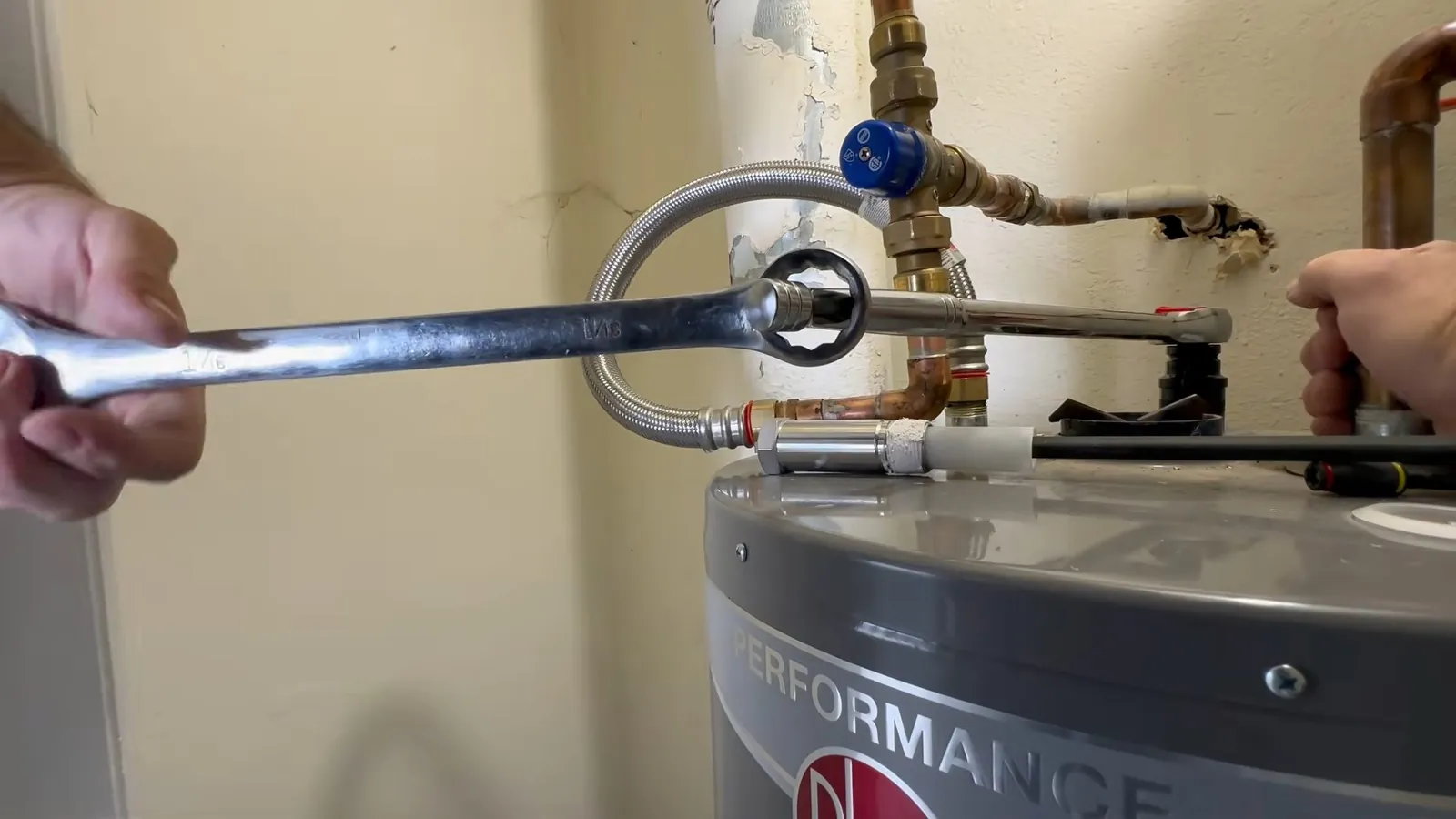
Replace like for like, or change the kind of heater?
A failed water heater feels like a deadline, but the choice of what replaces it affects the next ten years of bills and maintenance. Most households choose between three paths, and the right one depends on the fuel available and the space.
| Option | What it needs | Worth considering when |
|---|---|---|
| Standard tank, same fuel | The existing gas line or electric circuit, venting and space | The setup works and you want the simplest swap |
| Hybrid heat pump tank | A 240 volt circuit, space and airflow around the unit, and a condensate drain | You have an electric heater and room for a larger unit |
| Tank to tankless | A larger gas line or a heavy electric circuit, and different venting | You want an endless supply, see going tankless |
A hybrid unit pulls heat from the surrounding air to warm water, so it likes a space that is not tiny or closed in. A cold, cramped closet is a poor home for one. Ask the installer to look at the room before you pick a model.
Keeping the same fuel and the same footprint is usually the easiest path, because the gas piping, vent and drain are already in place. Changing fuel type means new lines, new venting or new electrical work, and the inspection requirements change with it.
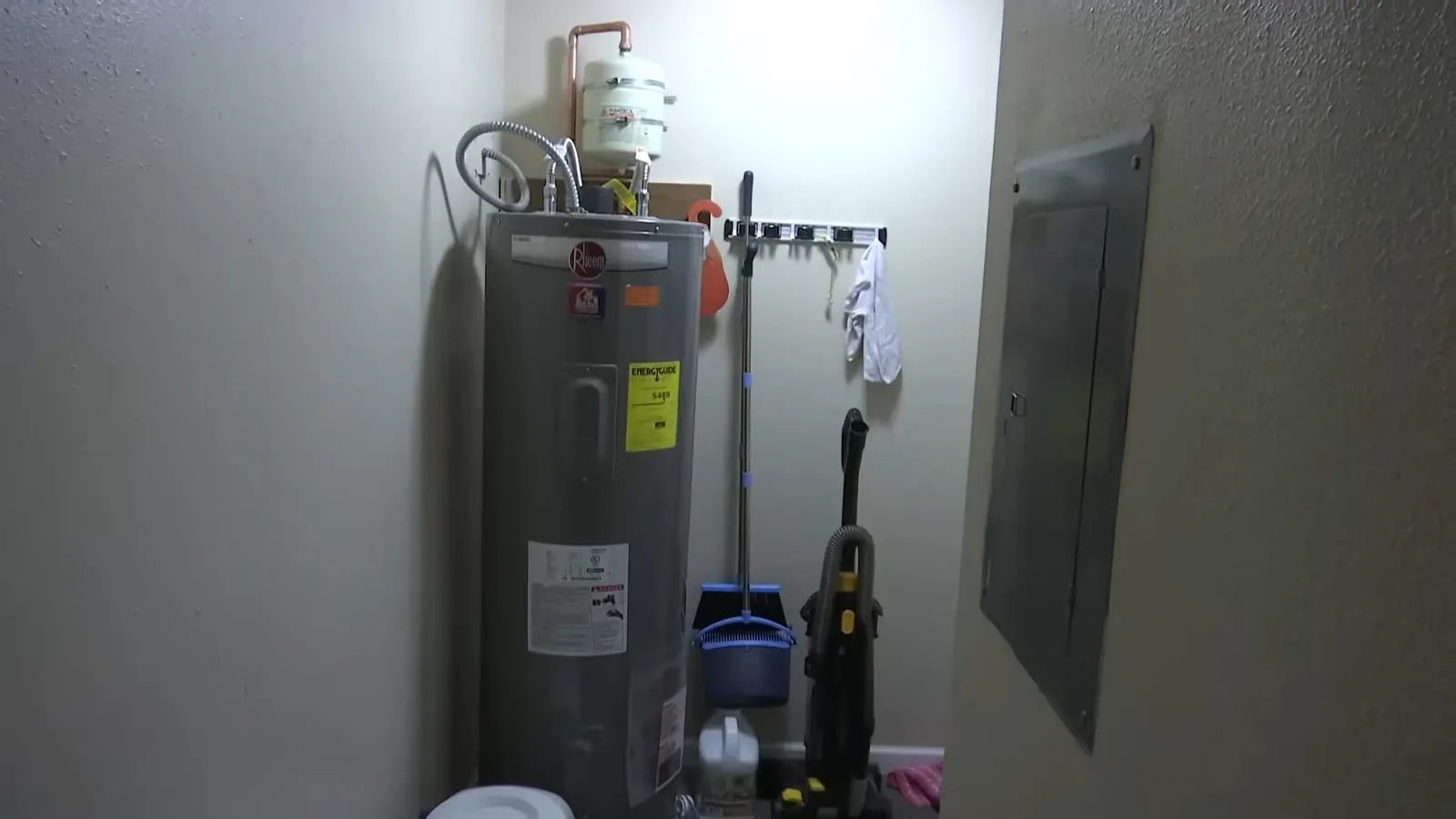
Does the replacement need a WSSC permit, and who arranges it?
In Montgomery County, WSSC Water, not the county, issues the permit and inspects the work. WSSC states that installing or replacing a gas water heater, tank or tankless, requires a WSSC permit and an inspection within 10 business days of installation, and that the installation should be done by a WSSC-licensed individual.
The licensee, meaning the master plumber or gasfitter holding the permit, is responsible for having the inspection performed. WSSC says the licensee should discuss the inspection with you before starting. Inspections run weekdays between 7:30 a.m. and 2:30 p.m. and can be booked up to three business days in advance.
- Ask for the plumber's WSSC license number and check it at 301-206-8588 or through the WSSC plumber lookup.
- Ask who pulls the permit, and ask for the permit number on the estimate.
- Ask who books the inspection and what date is planned.
- For an electric water heater, WSSC's published pages do not say whether a permit is needed, so confirm with WSSC Permit Services at 301-206-4003.
- Keep the inspection result with the invoice.
If the inspection does not happen within the window, the licensee must notify WSSC. WSSC adds that a missed inspection can affect the manufacturer's warranty and the licensee's own one-year warranty, which runs from final approval. For gas supply changes that go beyond the heater itself, see gas supply changes.
Heater already failed?
tell us the fuel type and age of the unit. It routes you to a plumber serving your area.
Size, location and the hard-water question
Size is about the household, not the house. A unit that is too small runs out during back-to-back showers. One that is too large costs more to buy and to keep hot. The plumber should ask how many people live there, how many bathrooms you have and whether any large tubs or multiple showers run together.
Location matters because the heater needs clearance, ventilation if it burns gas, a safe path for the relief valve discharge and a drain nearby in case it leaks. Moving a heater is a bigger job than swapping it, and it usually adds permit work.
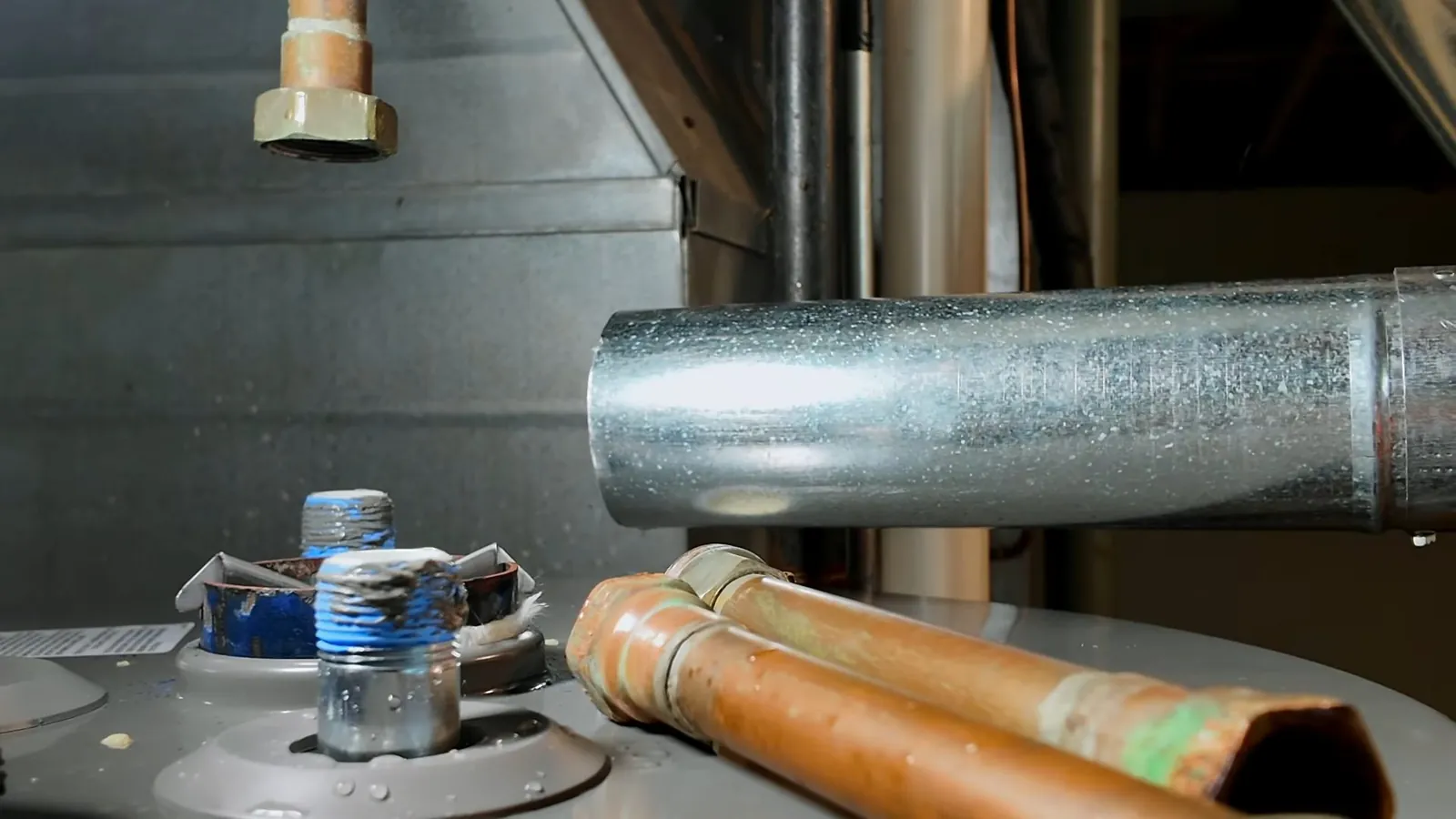
Potomac's water adds one more input. WSSC filters Potomac River water that averages about 120 to 130 mg/L hardness, which is roughly 7 grains per gallon. Scale builds on heating surfaces and shortens the life of a heater that is never flushed. Ask the installer whether the model has a replaceable anode rod, how often to flush it and whether a softener is worth considering for your household.
The expansion tank and pressure questions
When water heats, it expands. In an older open system the extra volume pushes back into the supply main. If your home has a pressure-reducing valve or a backflow device at the water entry, that path may be closed, and the pressure has nowhere to go. A small expansion tank on the cold supply near the heater absorbs the increase.
Whether yours needs one depends on the plumbing and on the code section the plumber applies, so do not accept a vague answer either way. A plumber who installs a tank can say why. A plumber who skips it should be able to explain why it is not needed, and note it on the quote.
- Is my system closed, and how did you check?
- Does the temperature and pressure relief valve discharge to a safe place, and where?
- Will the old expansion tank, if any, be reused or replaced?
- What is the water pressure at the house, and does it need a reducing valve?
What the quote and warranty paperwork should say
Replacement quotes vary widely because they bundle different things. Ask for a written scope that spells out the unit, the venting, the pipe fittings, the expansion tank, the permit and the haul-away of the old unit. A single line that says "install water heater" leaves room for surprises.
- The exact model, tank size, fuel type and energy details.
- Which parts are new and which are reused: vent, gas connector, shutoff valves and relief valve.
- Whether the price includes the WSSC permit and the inspection.
- The manufacturer's warranty terms and the installer's own labor warranty.
- Who removes and disposes of the old heater.
The water heater installation price ranges show what moves a quote in wide, honest terms. If the old heater might still be worth fixing, repairing the existing heater is the page to read first. Answers on gas appliance permits cover the rules more broadly.
Replacement questions before you sign
Does my water heater need an expansion tank?
It depends on whether your plumbing is a closed system, for example with a pressure-reducing valve or backflow device at the meter. In a closed system, heated water has nowhere to expand and pressure rises. Ask the plumber to check your system and to cite the code section that applies.
How long does a water heater replacement usually take?
A straightforward swap of a tank in the same spot often takes a few hours. Changing fuel type, moving the unit, adding venting or upgrading electrical or gas supply takes longer, and the WSSC inspection happens afterward on its own schedule.
Can I keep the old water heater's location and venting?
Often yes, but the plumber has to check the venting, the gas connection and the relief valve discharge against the current code when the new unit goes in. Ask what will be reused and what will be replaced, and have it written on the quote.
Ready to plan a water heater replacement?
Tell us whether the old unit is gas or electric and how old it is. It routes you to a plumber serving your area.